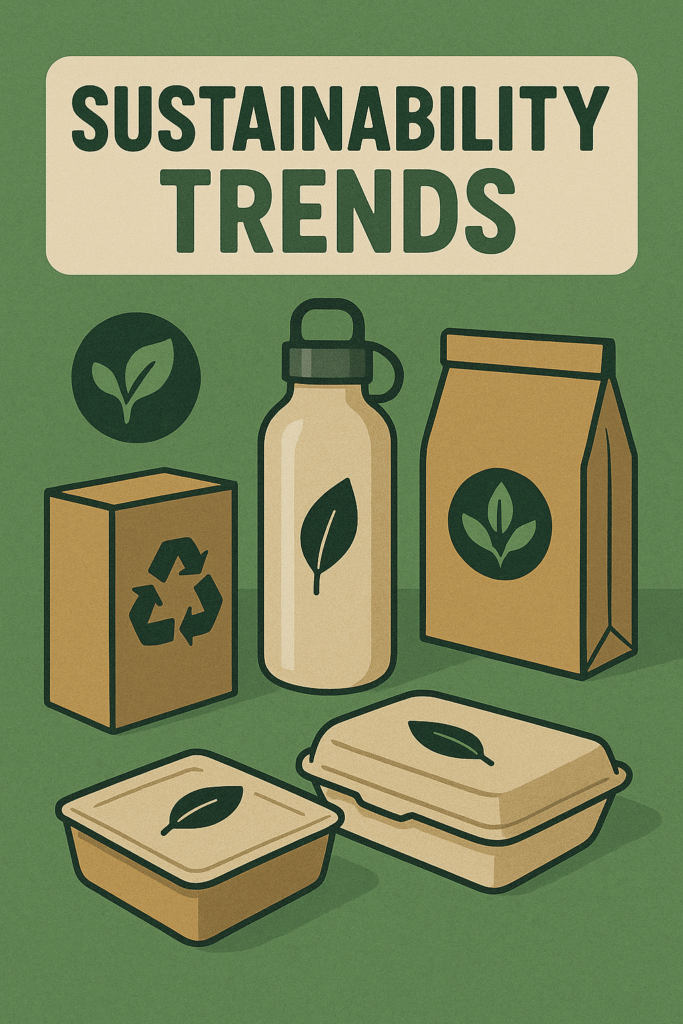
Sustainability has become the heartbeat of the packaging industry in 2025. Today’s consumers are not just buying products — they are buying into values, and eco-friendly packaging has become one of the clearest indicators of a brand’s commitment to those values. Shoppers now expect recyclable, compostable, and reusable materials, and brands that fail to adapt risk losing relevance in a competitive marketplace.
Why Sustainability Matters Now More Than Ever
Environmental concerns are no longer niche; they’ve gone mainstream. Governments are tightening regulations, retailers are demanding greener supply chains, and eco-conscious buyers are quick to call out greenwashing. Packaging, which often represents the first physical interaction a customer has with a product, is under particular scrutiny. A package that feels wasteful can create instant distrust, while sustainable design builds credibility and trust from the start.
Major Sustainability Trends Defining 2025
- Lightweight Glass Alternatives Traditional glass is recyclable but heavy, driving up transportation costs and emissions. In 2025, innovative lightweight glass and glass-like polymers are emerging as practical alternatives. They preserve the premium feel of glass while significantly reducing the carbon footprint.
- Compostable and Plant-Based Films Compostable films derived from materials like cornstarch or seaweed are gaining traction in food and consumer goods packaging. These films break down naturally, solving one of the biggest challenges with single-use plastics. More brands are adopting this solution to meet consumer demand and comply with stricter waste regulations.
- Refillable and Reusable Systems From personal care products to household cleaners, refillable models are proving to be a win-win. Customers save money and reduce waste, while brands benefit from repeat sales and stronger loyalty. Retailers are also investing in refill stations, reinforcing a culture of reuse.
- Minimalist and Multi-Use Packaging Design is trending toward simplicity. Minimalist, low-ink packaging reduces environmental impact while still delivering an elegant customer experience. Multi-use packaging — such as jars that double as storage containers — also extends a product’s lifecycle and reduces waste.
- Smart Sustainability Labels Transparency is key. Packaging now often includes QR codes or NFC tags that let customers track a product’s sustainability journey, from sourcing to disposal. These digital touchpoints empower buyers with knowledge and help brands prove their eco-friendly claims.
The Business Case for Green Packaging
Sustainability is not just about reducing environmental harm — it’s about creating long-term business value. Brands that invest in eco-friendly packaging are seeing stronger brand loyalty, higher customer satisfaction, and even cost savings from streamlined materials. In fact, sustainable packaging has become a differentiator that attracts partnerships with retailers and distributors who also value greener supply chains.
Looking Ahead
The packaging industry in 2025 is being shaped by a simple truth: sustainability is no longer optional. It’s a core driver of consumer choice and a key factor in brand survival. Companies that embrace recyclable, compostable, and reusable solutions are setting themselves up not just to survive but to thrive in a future where eco-friendly innovation defines success.