
Introduction
Resins are the backbone of modern packaging. From plastic bottles to food containers, these materials have transformed the industry by offering versatility, durability, and cost-effectiveness. Yet, the price of resins has been anything but stable. Over the decades, global economics, oil markets, regulations, and supply chain disruptions have shaped resin pricing in ways that continue to affect packaging producers and consumers alike.
The Early Years: Petrochemical Boom
In the mid-20th century, resin production surged with the rise of petrochemical industries. Prices were relatively stable, driven by cheap crude oil and growing demand for plastics like polyethylene (PE) and polypropylene (PP). This era marked the beginning of large-scale use of plastics in packaging, replacing glass, metal, and paper in many applications.
The Oil Crisis of the 1970s
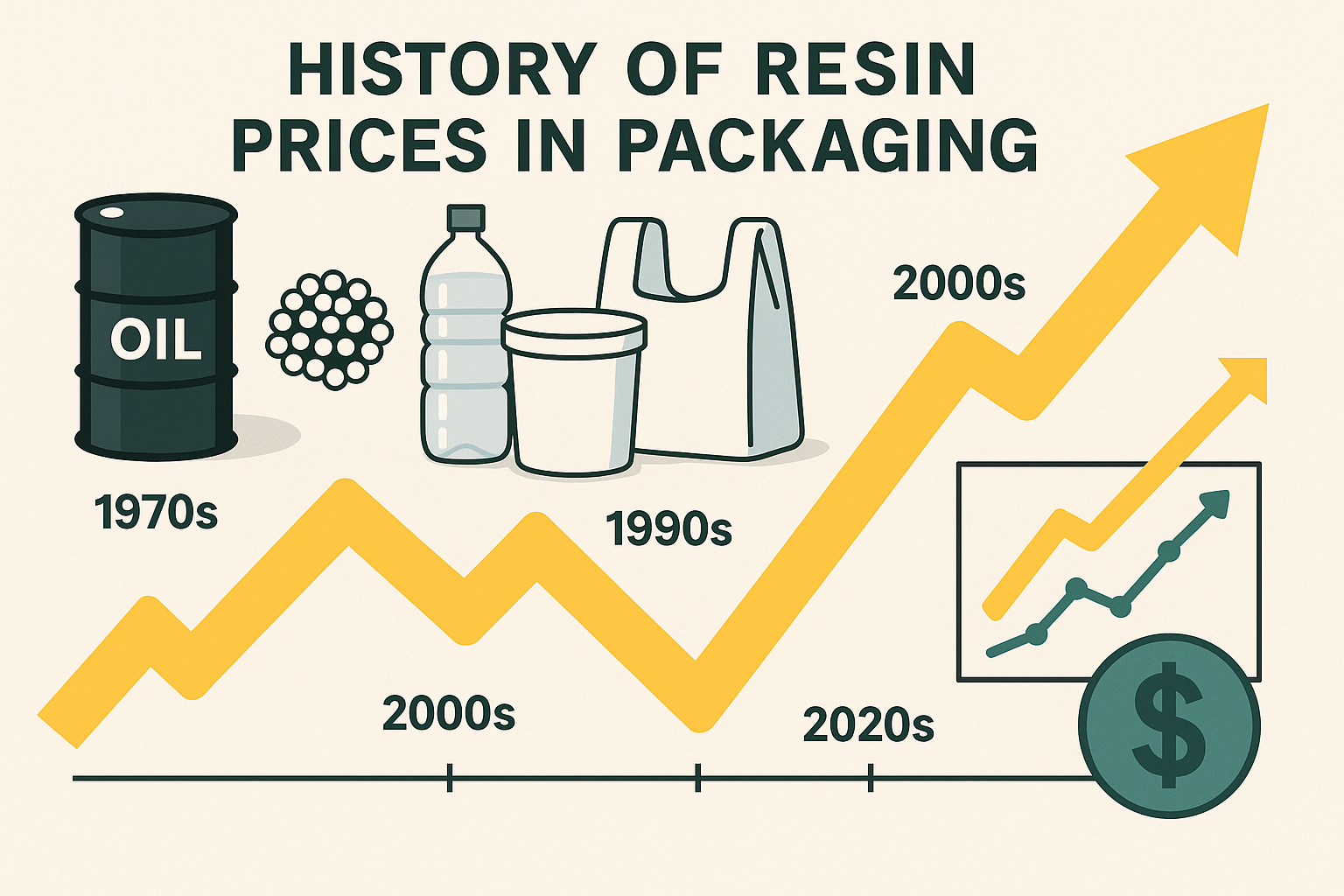
The 1973 oil embargo and subsequent energy crises sent shockwaves through the resin market. Since resins are petroleum-based, prices spiked dramatically. This period underscored the vulnerability of packaging materials to global energy markets and pushed companies to explore alternative sourcing and efficiency improvements.
1990s–2000s: Globalization and Expansion
As resin manufacturing spread globally, particularly to Asia, prices began to fluctuate more with shifts in international supply and demand. China’s rapid industrial growth increased demand for resins, while trade liberalization exposed regional markets to global price swings. Resin markets became more complex, tied not only to oil but also to global trade policies.
2008 Financial Crisis
The global recession in 2008 sharply reduced demand for packaging, causing resin prices to plummet. However, recovery was swift as e-commerce and food packaging surged, driving resin demand back up. This highlighted how economic cycles directly impact raw material costs.
Recent Trends: Volatility and Sustainability
In the last decade, resin prices have faced unprecedented volatility:
- COVID-19 Pandemic (2020) – Supply chain disruptions and spikes in demand for single-use packaging caused record-high resin prices.
- Energy Transition & Regulations – Moves toward renewable energy and restrictions on plastics have influenced both resin production costs and demand for alternatives.
- Recycling & Bio-based Resins – Pressure for sustainable packaging is driving investment in recycled and bio-resin materials, which can command premium prices.
Looking Ahead
Resin prices will continue to be shaped by energy markets, environmental regulations, and innovation in sustainable materials. For packaging companies, monitoring resin markets is crucial to managing costs and maintaining competitiveness in an industry where material prices can shift overnight.