
If a customer can open your package, reseal it, and hand it back to a store shelf without anyone noticing, you have a packaging problem — not just a security one. Tamper-evident seals close that gap by leaving unmistakable, irreversible proof when a package has been opened, whether that’s a torn shrink band, a broken foil liner, or a “VOID” pattern bleeding through a peeled label.
This guide breaks down the main seal materials and formats, how they actually work, and how to match one to your product, container shape, and budget — without overspending on a security level you don’t need.
Quick Answer
The right tamper-evident seal depends on your container: bottles and jars typically use induction seals under the cap or shrink bands around the neck; boxes and cartons use VOID labels or security tape; multi-piece containers use tamper tape or cross strips. Pick based on how the product is opened, not just what looks secure.
The Main Types of Tamper-Evident Seals
Shrink bands are heat-shrinkable plastic sleeves, most commonly PVC, PETG, or polyolefin, applied around a cap-and-neck or lid-and-body joint and shrunk with heat so they conform tightly. Once cut or torn to open the product, the band can’t be reapplied without it being obvious. They’re common on food, beverage, and supplement bottles.
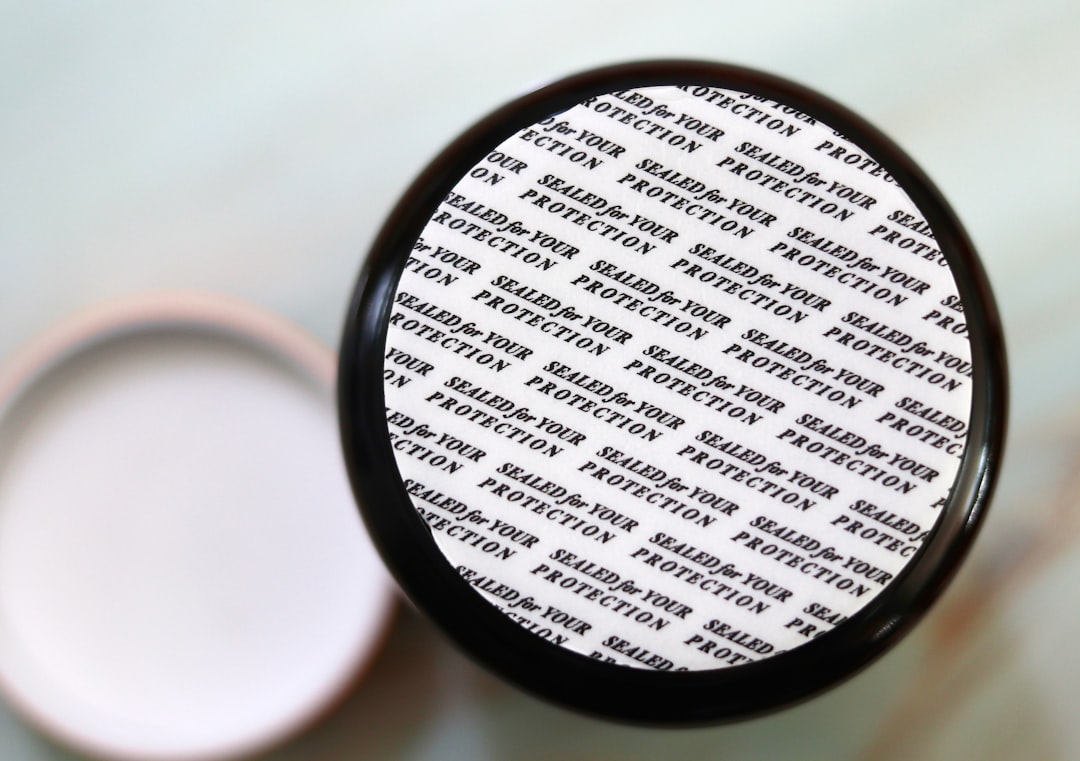
Induction seals (also called induction liners or foil seals) are foil-and-polymer liners placed inside a cap and bonded to the container mouth using an induction heat sealer, which uses electromagnetic energy to melt a wax or polymer layer and fuse the foil to the bottle rim. The consumer has to peel or puncture the foil to reach the product — a common choice for pharmaceuticals, nutraceuticals, and liquid consumer goods because it also adds a leak-proof barrier.
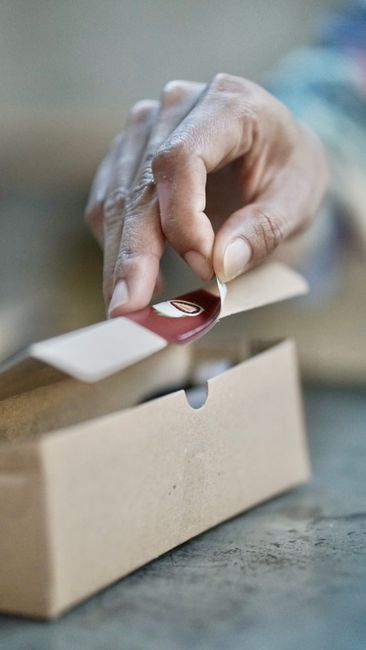
VOID (or destructible) labels come in two main material types: polyester film that leaves a printed “VOID” pattern on the surface when peeled, and destructible vinyl or “eggshell” stock that physically shatters into small fragments if someone tries to lift it, making the label impossible to remove and reapply cleanly. These work well on cartons, flat lids, electronics, and warranty seals.
Security (tamper) tape is pressure-sensitive tape engineered to split apart or reveal a hidden “OPENED” or “VOID” message in the adhesive layer if peeled back after application, so any tampering leaves visible residue or text on the box. It’s a low-cost option for sealing corrugated shipping cartons.
Blister and clamshell packaging seals the product between formed plastic (often PVC or PET) and a sealed backing card or foil, requiring the pack to be torn or cut open — common for over-the-counter medications and small retail goods.
Breakaway and two-piece caps use a perforated plastic ring that snaps and separates from the cap the first time it’s twisted open, giving a permanent visual cue that’s built into the closure itself rather than added as a separate label or band.
How to Choose the Right Seal for Your Product
Start with your container shape and closure. Round bottles and jars pair naturally with shrink bands or induction seals; flat-lidded cartons and boxes need labels or tape; multi-piece assemblies (like a lid that fits over a base) often need a cross strip or wraparound band that spans the seam.
Match the seal to your regulatory category. Under 21 CFR 211.132, the FDA requires most OTC drug products sold in the US to use tamper-evident packaging that gives consumers visible evidence of opening, with the label stating that feature (for example, noting the product is sealed under the cap). A handful of product types are specifically exempted from this rule — dermatologics, dentifrices, insulin, and throat lozenges — so check whether your product falls into one of those categories before assuming the requirement applies. Food, supplement, and cosmetics brands generally aren’t subject to a blanket federal tamper-evident mandate, but retailers and marketplaces increasingly expect it anyway.
Weigh cost against line speed and durability. Shrink bands and induction seals usually need dedicated equipment (a heat tunnel or induction sealer) and work best on higher-volume runs. VOID labels and security tape can be applied by hand or with basic label dispensers, making them a better fit for small-batch or made-to-order brands.
Test the seal on your actual container before committing to a full print run — material, adhesive, and container surface (glass, HDPE, coated cardboard) all affect how cleanly a seal shatters, peels, or shrinks, and a seal that works on one substrate can perform very differently on another.
Tips and Common Mistakes
Don’t rely on a seal alone — pair it with clear on-package language telling customers what to look for (“Do not use if seal is broken”), since a tamper-evident feature only works if buyers know it’s there.
Avoid generic, unbranded VOID labels if counterfeiting is a real risk for your product; custom printed or serialized labels are harder to source and replace than off-the-shelf stock.
Don’t oversize shrink bands or under-heat them during application — a loose or unevenly shrunk band can be slid off and reused, defeating the purpose.
Remember that tamper-evident is not the same as child-resistant. Child-resistant packaging is governed separately by standards like ASTM D3475 and is about restricting access by children, not signaling that a package has already been opened; some products need both features together.
Explore more: packaging materials guides.
Tamper-evident packaging seals FAQs
What’s the difference between tamper-evident and tamper-resistant packaging?
Tamper-evident packaging shows visible proof after the fact that a package was opened — a torn band, broken label, or punctured seal. Tamper-resistant packaging is designed to make opening the package difficult in the first place. Most real-world seals do a bit of both, but the legal and design focus of “tamper-evident” is specifically on leaving visible evidence.
Are tamper-evident seals legally required?
In the US, most OTC drug products must use tamper-evident packaging under FDA rules (21 CFR 211.132) — though dermatologics, dentifrices, insulin, and throat lozenges are specifically exempted from that requirement. For food, supplements, and general retail goods, there’s usually no blanket federal requirement, but many retailers, marketplaces, and liability concerns make tamper-evident seals a practical necessity.
Can tamper-evident seals be reused or reapplied?
A properly chosen and applied seal shouldn’t be reusable without leaving obvious damage — a shattered eggshell label, a printed VOID pattern, a snapped shrink band, or a punctured foil liner. If a seal can be removed and reapplied cleanly, it’s either the wrong material for the surface or wasn’t heat-set/adhered correctly.
Find the Right Packaging Supplier
Search the free Packaura supplier directory — filter by material, certification, and location to find vetted suppliers. Search the Supplier Directory.
Want packaging news in your inbox? Subscribe to the free newsletter.
Photo by Jay on Unsplash.