
If you’re specifying a pouch or bag structure and need to decide between metallized film and aluminum foil, the choice comes down to how much barrier protection your product actually needs versus what you’re willing to pay for in cost, weight, and recyclability tradeoffs.
This guide breaks down how each material is built, where each one performs best, and how to think through cost and sustainability before you commit to a structure.

Quick Answer
Aluminum foil gives the strongest, most complete barrier against oxygen, moisture, and light, so it’s the default for products with long shelf-life requirements or high sensitivity to spoilage. Metallized film delivers a lighter, lower-cost barrier that’s good enough for most snack, coffee, and short-to-medium shelf-life products, and it’s generally easier to run on high-speed sealing equipment.
What’s Actually Different About These Two Materials
Aluminum foil used in flexible packaging is a solid layer of aluminum, typically laminated between plastic film layers for strength and sealability. Because it’s a continuous metal sheet, it acts as a near-total block against oxygen, moisture vapor, and light, which is why it’s long been considered the gold-standard barrier layer.
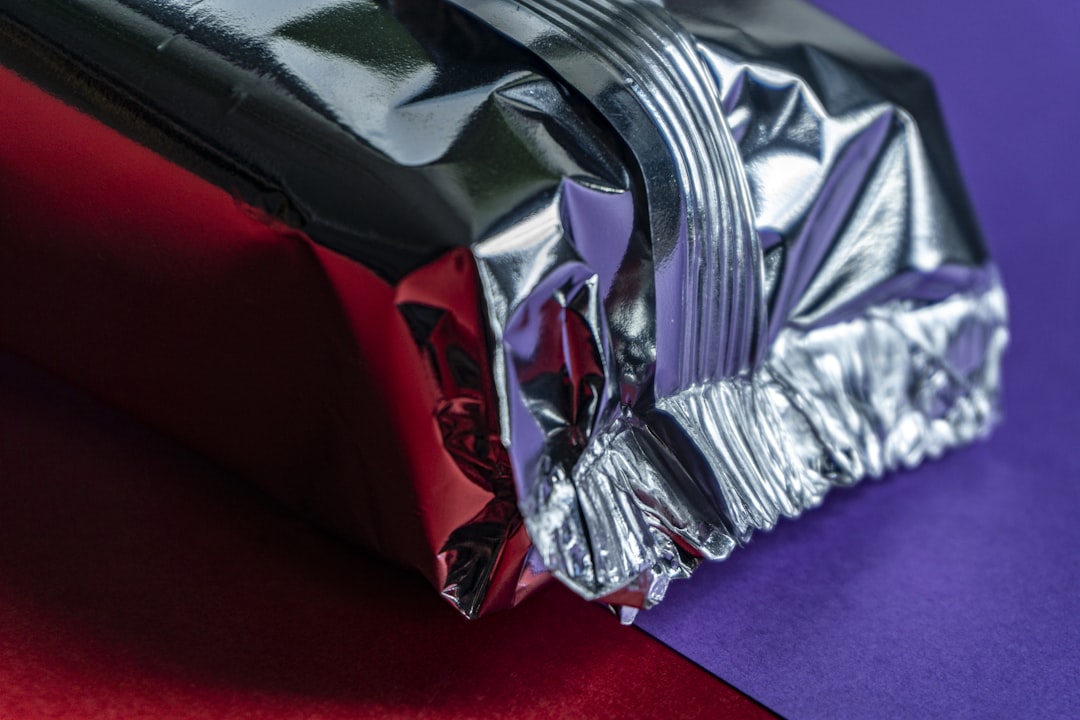
Metallized film starts as a plastic film — usually polyester (metallized PET) or oriented polypropylene (metallized OPP/BOPP) — with an extremely thin layer of vaporized aluminum deposited onto its surface, far thinner than a foil layer. That thinner metal layer still meaningfully improves oxygen and moisture resistance and adds light blocking, but it isn’t a fully continuous barrier the way solid foil is, so its performance falls short of foil in the toughest applications.
The practical result: foil is the stronger, heavier, more expensive barrier; metallized film is the lighter, cheaper, ‘good enough for most things’ barrier.
Where Each Material Wins
Reach for aluminum foil when the product needs maximum shelf-life extension or protection from light and oxygen degradation — think pharmaceutical blister backing and pouches, medical device packaging, retort or vacuum-packed foods, and products that will see extreme storage conditions. Foil also tends to hold up better under heat sealing and sterilization/retort processing, since it isn’t as sensitive to high-temperature distortion as some metallized film substrates.
Metallized film is the workhorse choice for snack foods, confectionery wrappers, coffee and tea packaging, cosmetic sachets, and other products with moderate barrier needs and shorter shelf-life targets. Because it’s lighter and thinner, it runs efficiently on high-speed form-fill-seal lines, tends to show good seal and flex-crack resistance, and generally costs less per square foot than a comparable foil laminate — making it the more budget-friendly default for high-volume packaging runs.
If you’re unsure which category your product falls into, look at your target shelf life and storage conditions first. Products that must survive months on a shelf with no refrigeration and high sensitivity to oxidation (infant formula, certain nutraceuticals, some coffee formats) often justify foil or a high-barrier metallized structure with added coatings like EVOH; everyday snack and confectionery items rarely need that level of protection.
Cost, Weight, and Recyclability Considerations
Metallized film’s biggest practical advantages are weight and cost — it’s lighter to ship, easier to print and convert, and typically less expensive per square foot than foil laminations, which usually require more layers to achieve equivalent strength and sealability.
On recyclability, neither material is a clean win today. Standard foil laminate pouches are generally treated as non-recyclable in municipal programs because the metal content interferes with plastic recycling sortation. Metallized films face similar hurdles in most curbside systems, though the packaging industry is actively developing recyclable alternatives — including all-polyethylene structures using barrier coatings or thin oxide layers designed to qualify for How2Recycle’s Widely Recyclable or Store Drop-off labels rather than landing in its Not Yet Recyclable category. If recyclability is a priority for your brand, ask your packaging supplier specifically about mono-material or all-PE options rather than assuming either foil or standard metallized film will qualify.
Tips / Common Mistakes
Don’t over-spec foil ‘just to be safe.’ If your product’s actual shelf-life and barrier requirements are moderate, a metallized film structure (sometimes with an added EVOH or PVDC coating) can hit the same performance target at lower cost and weight — foil is easy to over-buy when metallized film would do the job.
Don’t assume all metallized films perform the same. Metallized PET and metallized OPP have different strengths — PET tends to offer more balanced oxygen and moisture resistance, while OPP often excels specifically at moisture barrier — so match the substrate to your product’s dominant risk (oxidation vs. moisture pickup).
Don’t skip a seal and abuse test. Foil can crack at fold lines and metallized layers can develop micro-cracks (pinholing) under flexing or rough handling, which quietly ruins barrier performance even when the pouch looks intact. Run flex-crack and drop testing on your actual structure before committing to a large print run.
Don’t ignore recyclability claims without verification. If a supplier markets a structure as ‘recyclable,’ ask which specific How2Recycle designation it actually qualifies for (Widely Recyclable, Check Locally, or Store Drop-off) — many municipal systems still can’t process metallized or foil laminates regardless of marketing language.
Explore more: Explore more packaging material comparisons.
Metallized Film vs Aluminum Foil FAQs
Is metallized film as good a barrier as aluminum foil?
No — metallized film’s aluminum layer is far thinner than solid foil, so it offers weaker (though often still adequate) oxygen, moisture, and light barrier performance. For most snack and moderate-shelf-life products it’s sufficient; for long shelf-life or highly oxygen-sensitive products, foil generally performs better.
Is metallized film cheaper than aluminum foil?
Generally yes. Metallized film typically costs less per square foot than a foil laminate, partly because it uses far less aluminum and often requires fewer or thinner laminated layers to achieve adequate strength and sealability.
Can metallized film or aluminum foil packaging be recycled?
Both are difficult to recycle in standard curbside programs today, since the metal layer disrupts typical plastic sorting processes. Some suppliers now offer recyclable mono-material or all-polyethylene alternatives with barrier coatings that can earn a Widely Recyclable or Store Drop-off How2Recycle label — ask your supplier which designation, if any, a given structure actually qualifies for.
Source Smarter With Packaura Direct
Find packaging suppliers, surplus inventory, and certification — all on Packaura Direct. Try Packaura Direct.
Want packaging news in your inbox? Subscribe to the free newsletter.
Photo by Jan Kopřiva on Unsplash.