
Fresh produce is alive. It keeps respiring, releasing moisture and heat after harvest. The package you pick either helps manage that or works against it. Clamshells, mesh bags and film wrap are the three most common retail formats, and each suits different products.
This guide compares the three on protection, airflow, shelf appeal, material use and recyclability. It then gives you a simple way to match a format to your product. Check any specific claim about shelf life or recyclability against your own product and local rules before you commit.
Quick Answer
Use clamshells for delicate, high-value items like berries, cherry tomatoes and mushrooms. Use mesh bags for hardy, airflow-loving items like potatoes, onions and citrus. Use film wrap (flow wrap or a sealed film bag) for whole items and leafy greens where moisture control matters, such as cucumbers, peppers and salad mixes. For leafy greens and cut produce, choose a film engineered for that product.
How Each Format Works
Clamshells: Rigid, clear containers, typically made of PET, protect fragile fruit from crushing and let shoppers see every piece. Vents let air move through the pack. They are easy to fill in the field and stack well. The tradeoffs are that they use much more plastic than a bag or a tie, and they often end up as a lower-grade recycling stream. Food residue and the thermoform share of recycling bales both limit what recyclers accept, so what you can claim depends on your local collection.
Mesh bags: Open mesh gives the most airflow of the three. It suits produce that is prone to decay when moisture is trapped, and its thin strands leave little surface for condensation to collect. Mesh is also light and inexpensive to ship. The downsides are little physical protection for soft items, and the fact that shoppers may reject a whole bag if one item shows damage.
Film wrap: Polyethylene and other films are cheap, print well and run on fast automated lines. Flow wrap seals individual items or groups, and it can use less material than a rigid pack. Plain film can trap moisture, so films are often perforated or engineered as modified atmosphere packaging (MAP). MAP matches the film’s gas transmission to the produce’s respiration rate, and each product needs its own design. Films with micro-perforations are one way to do this. Film is also harder to recycle at home, so check whether your film is a mono-material that store drop-off programs accept.
How to Choose: A Step-by-Step Approach
Step 1: Classify your product by fragility. Berries, herbs, cherry tomatoes and mushrooms bruise easily and generally need a rigid clamshell or a sealed tray. Potatoes, onions and citrus tolerate handling and fit mesh.
Step 2: Match airflow to respiration and moisture. Produce that rots when wet, such as onions and citrus, favors mesh or well-vented packs. Produce that wilts, such as leafy greens and cucumbers, benefits from film that holds humidity. If you use a vented clamshell, the amount of vent area matters. Extension research points to a modest share of the pack face as a good balance between airflow and stacking strength. Ask your supplier for a tested design rather than punching holes yourself.
Step 3: Consider your fill process. Clamshells suit hand or field packing. Mesh and film bags suit automated form-fill-seal lines. Flow wrap without a tray is fast and can lower per-pack cost, but delicate items often still need a tray.
Step 4: Weigh sustainability and claims. Lighter formats cut material use, and some retailers and grower groups are moving from clamshells toward film-sealed thermoform trays. If you make recyclability claims, use standard labeling such as How2Recycle and make sure the claim matches what most consumers can actually do.
Step 5: Test before you scale. Run a small pilot with your real product, your real cold chain and your retailer’s shelf conditions. Compare bruising, condensation, decay and shopper appeal across two or three formats before buying in volume.
Tips / Common Mistakes
Do not assume plastic packaging automatically extends shelf life. For many products it makes little difference, and the wrong film can even speed decay by trapping condensation. Do not choose a pack on looks alone: a beautiful clamshell that crushes under stacking weight costs you more than a plain mesh bag. Do not skip food-contact compliance. Packaging that touches food should be made for food contact, and recycled content in food packaging is subject to FDA review. Finally, do not forget the cold chain. Even the best package cannot make up for warm storage.
Explore more: Explore more packaging materials guides.
Fresh produce packaging FAQs
Which is best for berries: clamshell, mesh or film?
A vented clamshell is the standard choice because it protects fragile fruit from crushing while letting air circulate. A film-sealed tray can offer similar protection with less plastic, but test it for condensation.
Are mesh bags good for all vegetables?
No. Mesh works best for hardy produce like potatoes, onions and citrus. It offers little protection for soft or fragile items and does not hold humidity for wilt-prone vegetables.
Are produce clamshells recyclable?
It depends on the material and your local program. Many are PET, but recycling markets can limit how many thermoforms they accept per bale, and food residue lowers quality. Check local guidance and the on-pack label.
Does film wrap keep produce fresher?
Only when the film suits the product. Modified atmosphere films are engineered to balance oxygen and carbon dioxide for a specific item. A generic film that traps moisture can hurt quality.
Find the Right Packaging Supplier
Search the free Packaura supplier directory — filter by material, certification, and location to find vetted suppliers. Search the Supplier Directory.
Want packaging news in your inbox? Subscribe to the free newsletter.
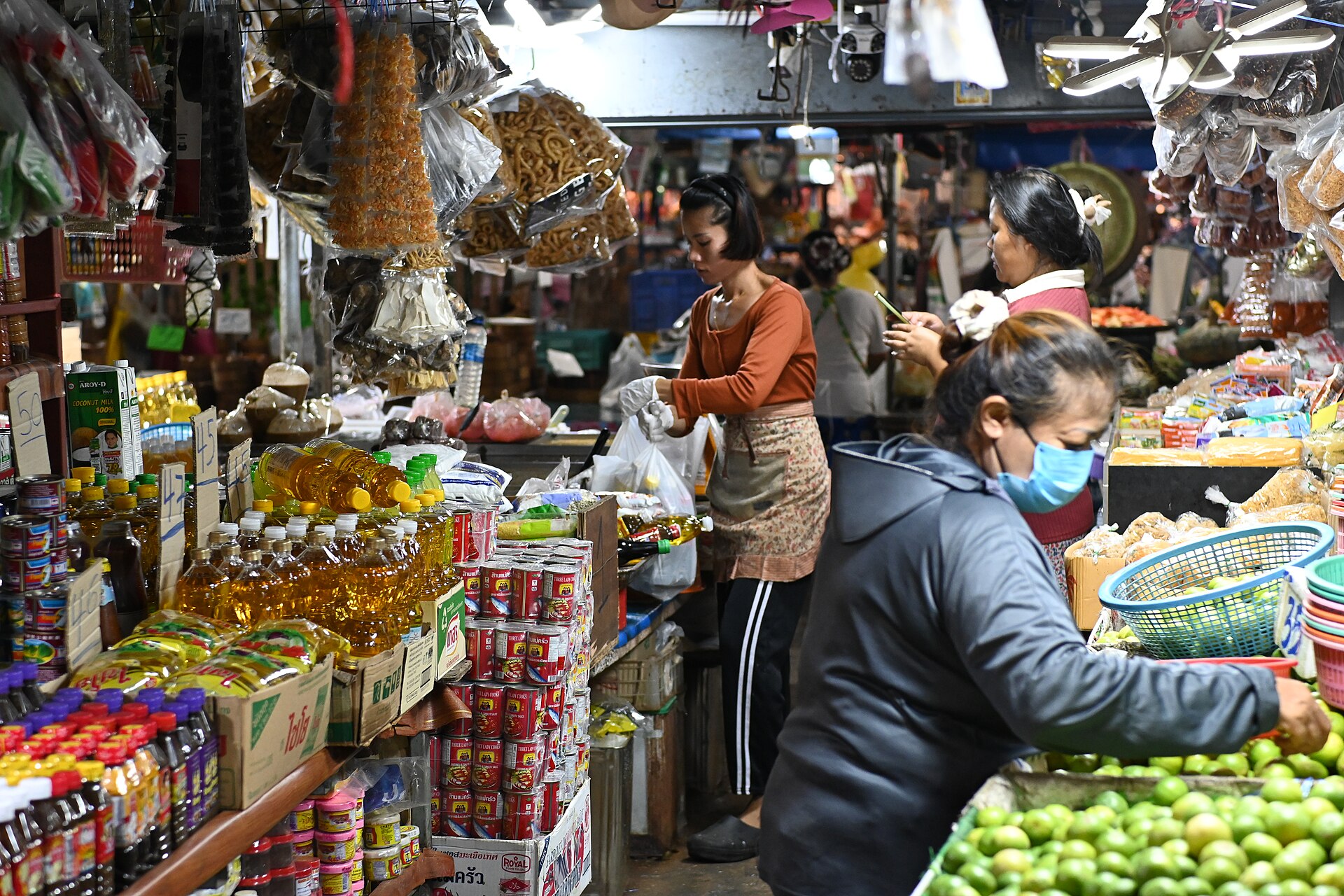
Photo: PattayaPatrol / CC BY-SA 4.0, via Wikimedia Commons.