
Shrink wrap and stretch film are two of the most widely used packaging materials in the world, yet they are frequently confused or used interchangeably — leading to wasted material, poor performance, and unnecessary costs. Understanding the key differences between shrink wrap and stretch film is essential for choosing the right solution for your specific application. Packaura helps packaging professionals find the right film solutions by connecting them with specialized suppliers.
What Is Shrink Wrap?
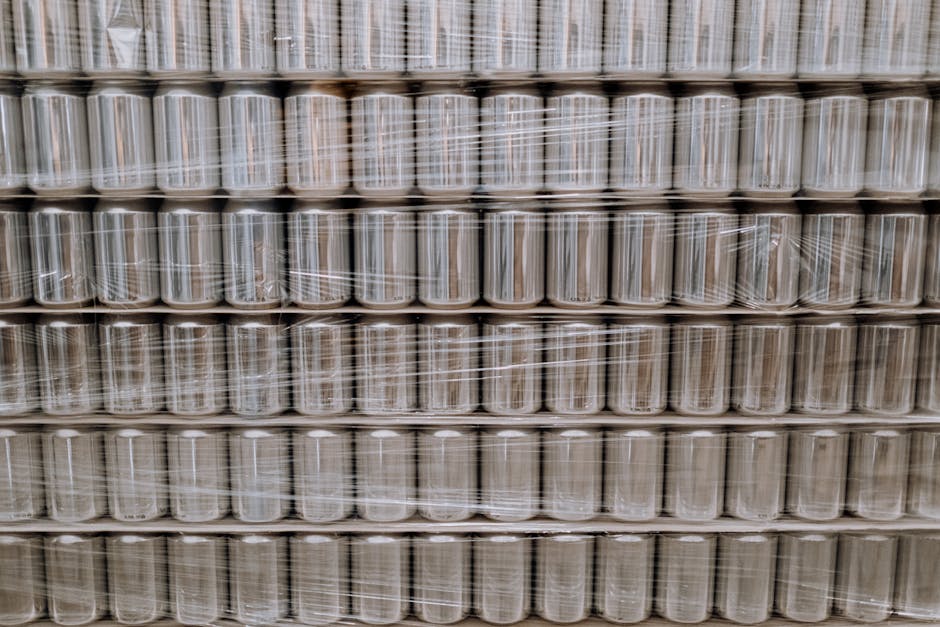
Shrink wrap is a polymer film that shrinks tightly around a product when heat is applied. Available in PVC, polyolefin, and polyethylene formulations, shrink wrap creates a conforming, tamper-evident seal around individual products or multi-packs. The heat-shrinking process can be performed using heat tunnels, heat guns, or infrared systems depending on production volume and product sensitivity.
What Is Stretch Film?
Stretch film (also called stretch wrap or pallet wrap) is an elastic polymer film that is stretched around products or pallets to hold them together through tension. Unlike shrink wrap, stretch film does not require heat — it relies on the film’s elastic recovery to maintain a tight, secure hold. Stretch film is primarily used for pallet unitization and load stabilization during shipping and storage.
8 Key Differences Between Shrink Wrap and Stretch Film
1. Application Method
The fundamental difference between shrink wrap and stretch film is how they are applied. Shrink wrap requires heat to activate — the film is loosely placed around a product, then exposed to heat (typically 250-350°F) which causes the film to contract and conform tightly. Stretch film requires no heat — it is mechanically stretched 100-300% and wrapped around products or pallets, where its elastic memory maintains tension.
This distinction has significant implications for equipment, energy costs, and the types of products each film can protect.
2. Primary Use Cases
Shrink wrap and stretch film serve different primary purposes:
Shrink wrap is best for:
- Individual product packaging and bundling
- Retail multi-packs (beverage six-packs, grouped products)
- Tamper-evident seals for food, pharmaceuticals, and consumer goods
- Point-of-sale display packaging
- Custom packaging overwraps for printed cartons and boxes
Stretch film is best for:
- Pallet wrapping and load stabilization
- Bundling large or heavy items for shipping
- Warehouse storage protection
- Securing irregular loads on pallets
- Protecting goods from dust and moisture during storage
3. Material Types and Properties
Shrink wrap films come in three main types:
- PVC (Polyvinyl Chloride) — the most affordable option, suitable for non-food items. Produces fumes when heated that require ventilation.
- Polyolefin (POF) — the preferred choice for food-safe packaging, FDA-approved, cleaner shrinking process, and superior clarity.
- Polyethylene (PE) — heavy-duty film for larger items like boats, furniture, and construction materials.
Stretch film is primarily made from LLDPE (Linear Low-Density Polyethylene) and comes in:
- Cast stretch film — manufactured by continuous casting, offers quiet unwind, superior clarity, and consistent stretch
- Blown stretch film — manufactured by blown extrusion, offers higher puncture resistance and load-holding force
- Pre-stretched film — stretched during manufacturing so it requires less force to apply, reducing worker fatigue
4. Equipment Requirements
Shrink wrap operations require:
- L-bar or side sealers to cut and seal the film around products
- Heat tunnels or heat guns to shrink the film
- Higher energy consumption due to heat requirements
Stretch film operations require:
- Hand-held dispensers for manual wrapping (low volume)
- Semi-automatic turntable wrappers for medium volume
- Automatic rotary arm or orbital wrappers for high volume
- No heat source needed, resulting in lower energy costs
For businesses deciding between shrink wrap and stretch film, equipment investment and operating costs should factor into the decision alongside packaging performance requirements.
5. Product Protection Capabilities
Both films protect products, but in different ways:
Shrink wrap provides conforming protection — the film shrinks to the exact contour of the product, preventing movement and providing a barrier against dust, moisture, and tampering. It is ideal for products that need individual encapsulation.
Stretch film provides unitization and stabilization — it holds multiple items together as a single unit and secures them to a pallet. It excels at preventing load shifting during transit but does not conform to individual product shapes within the load.
6. Transparency and Print Quality
Both shrink wrap and stretch film offer high clarity, but shrink wrap generally provides a smoother, more optically clear finish after application because the heat process eliminates wrinkles and creases. This makes shrink wrap superior for retail applications where product visibility matters.
Shrink wrap can be printed with brand graphics, UPC codes, and promotional messages, making it an effective labeling and decoration option. Stretch film can also be printed (often with company logos or “DO NOT BREAK STRETCH” warnings) but print quality is lower due to the stretching process that distorts graphics.
7. Cost Comparison
Shrink wrap typically costs more per unit packaged than stretch film for pallet-scale applications due to:
- Higher film material costs per square foot
- Energy costs for heat application
- More complex equipment requirements
- Slower application speeds for some formats
However, for individual product packaging and retail bundling, shrink wrap is often the most cost-effective solution because stretch film is not suitable for these applications.
Stretch film is the clear cost leader for pallet wrapping, with material costs of $2-8 per pallet versus $5-15 or more for shrink-wrapping an entire pallet. According to the Packaging Machinery Manufacturers Institute (PMMI), stretch wrapping is the most economical method for securing pallet loads in the packaging industry.
8. Sustainability and Recyclability
Both shrink wrap and stretch film face sustainability scrutiny:
- Stretch film is widely recycled through commercial recycling programs. LLDPE stretch film is accepted at most commercial recyclers and has strong end markets. Post-use stretch film from pallet operations is one of the most successfully recycled plastic films in the packaging industry.
- PVC shrink wrap has limited recyclability and is being phased out by many brands due to chlorine content. Polyolefin shrink wrap is technically recyclable but less commonly collected and recycled than stretch film.
- Both films are available in recycled content formulations with 30-50% post-consumer recycled (PCR) material.
For brands prioritizing sustainability, stretch film offers a better recyclability profile for secondary packaging, while polyolefin shrink wrap is the preferred option for primary packaging applications where shrink wrap is necessary. Explore sustainable film options on the Packaura marketplace.
Choosing Between Shrink Wrap and Stretch Film
The choice between shrink wrap and stretch film comes down to your application:
- Individual products or retail bundling → Shrink wrap
- Pallet loads and shipping unitization → Stretch film
- Tamper evidence required → Shrink wrap
- Heavy or irregular loads → Stretch film
- High-clarity retail presentation → Shrink wrap
- Maximum cost efficiency at scale → Stretch film
Many operations use both — shrink wrap for primary and secondary packaging, and stretch film for tertiary pallet packaging. The key to packaging efficiency is using the right film for each stage of your packaging operation.
Frequently Asked Questions
Can stretch film replace shrink wrap for product packaging?
Stretch film cannot effectively replace shrink wrap for individual product packaging or retail bundling. Stretch film does not conform tightly to product shapes and does not provide the same level of tamper evidence or optical clarity. Stretch film is designed for pallet-scale unitization, not individual product presentation. Use shrink wrap for product-level packaging and stretch film for pallet-level load securing.
Is shrink wrap food safe?
Polyolefin shrink wrap is FDA-approved for direct food contact and is widely used for food packaging including fresh produce, bakery products, and frozen foods. PVC shrink wrap is generally not recommended for direct food contact due to potential chemical migration, though some PVC formulations are FDA-approved for specific applications. Always verify FDA compliance with your film supplier and check that the specific grade is approved for your food type and temperature conditions.
How do I calculate how much stretch film I need per pallet?
The amount of stretch film per pallet depends on pallet dimensions, number of wraps, film width, and stretch percentage. A standard 48x40x60 inch pallet typically requires 4-6 revolutions of 20-inch wide stretch film at 200% stretch, using approximately 200-300 feet of film per pallet. At an average cost of $0.02-0.04 per foot, material cost is roughly $4-12 per pallet. Semi-automatic and automatic wrappers optimize film usage and can reduce consumption by 20-30% compared to manual wrapping.
1 thought on “Shrink Wrap and Stretch Film: 8 Key Differences Every Packaging Professional Must Know”