
If you sell cannabis products, your packaging has to do more than look good on a shelf — it has to pass a recognized safety test and satisfy whatever your state’s cannabis regulator layers on top of it. Get it wrong and you’re looking at failed inspections, recalled batches, or a license problem, not just a reprint.
This guide walks through what “child-resistant” actually means, how state requirements differ, and what to look for when you’re sourcing packaging so you’re not stuck with containers that look compliant but aren’t.
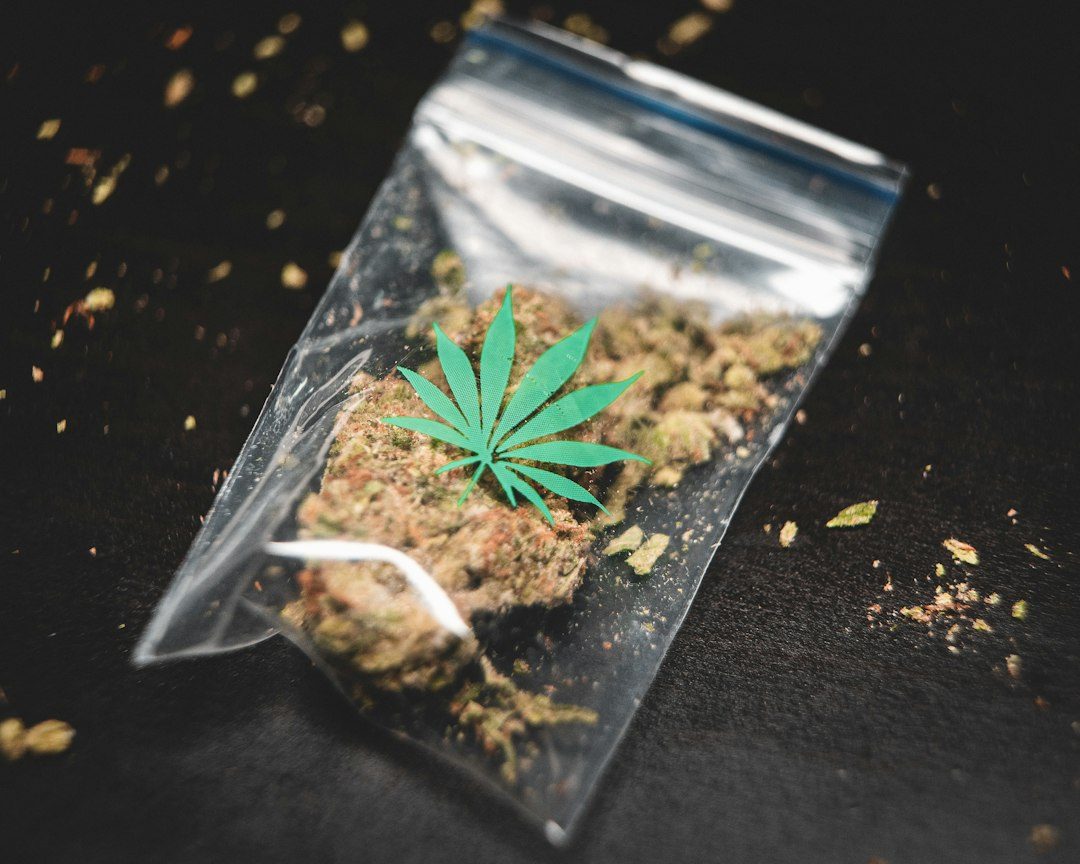
Quick Answer
Child-resistant cannabis packaging is generally tested against the protocol in 16 CFR 1700.20 and judged against the performance requirement in 16 CFR 1700.15(b)(1) — federal standards written under the Poison Prevention Packaging Act (PPPA). Cannabis itself isn’t a substance the PPPA federally regulates, so there’s no federal certificate the CPSC itself requires for a cannabis package. Instead, state cannabis regulators borrow the CPSC test standard and build their own requirement on top of it — setting which products need child-resistant packaging, whether it has to resist repeated openings, and what documentation you need from the supplier.
What Makes Packaging Legally Child-Resistant
The test protocol behind “child-resistant” packaging — how many children and adults try to open the package, in what time window, and what counts as a pass — comes from the Consumer Product Safety Commission’s rules under the PPPA, specifically 16 CFR 1700.20. The performance bar the package has to clear is in 16 CFR 1700.15(b)(1). CPSC doesn’t certify or endorse testing labs, and an empty container on its own doesn’t require certification at all under the PPPA — CPSC’s own guidance treats the empty package as outside the special-packaging certification requirement. Where a federal certificate does apply, it’s the responsibility of whoever actually fills a PPPA-regulated household substance into the package, not the container maker. Cannabis isn’t on that federally regulated substance list, so no federal CPSC certificate is required for cannabis packaging at all — any certification you need comes entirely from your state’s cannabis regulation, which typically points to the CPSC test standard as the technical bar but writes its own documentation and proof requirements around it.
You’ll also see packaging described as “ASTM D3475 compliant.” D3475 is an ASTM International classification standard for child-resistant packages, not a certification by itself — a package tested to the CPSC protocol can reference D3475, but the actual test report against 16 CFR 1700.20 is what proves compliance. Treat a supplier’s D3475 claim as a starting point, not proof, and ask for the underlying test report.
Most state cannabis rules build directly on the CPSC test standards. California, for example, lets packaging qualify as child-resistant when it’s certified to 16 CFR 1700.15(b)(1) under its own cannabis regulations (Cal. Code Regs. tit. 4, § 17412) — that certification requirement comes from the state rule, not from CPSC. Rhode Island’s medical cannabis guidance goes further and calls for that certification to come from a qualified third-party testing firm specifically, not just a self-certification from the manufacturer.
Where State Rules Diverge
Nearly every state with a legal cannabis program requires child-resistant packaging in some form, but the details vary enough that a package compliant in one state can fail in another. Three things to check for your specific state: whether packaging must stay child-resistant through repeated openings (“continually child-resistant”) or only needs to resist opening the first time; whether a non-child-resistant product container is allowed as long as it goes into a child-resistant exit bag at the point of sale; and whether your state keeps a pre-approved list of packaging types that don’t need a separate exit bag.
Oregon’s liquor and cannabis regulator, for instance, publishes a list of pre-approved resealable child-resistant packages that are exempt from the exit-bag requirement — if your container is on that list, you skip a step. Ohio requires a separate certification form for every combination of packaging size, material, and closure type, which catches a lot of brands off guard when they assume one certificate covers a whole product line.
Exit packaging has its own logic, laid out in industry guidance like ASTM D8233: if the product’s immediate container is already child-resistant, neither a secondary box nor the exit bag needs to be. If the immediate container isn’t child-resistant, the opaque exit bag the budtender hands over at checkout has to do that job instead.
Where to Source Compliant Packaging
You generally have three channels: packaging distributors that specialize in cannabis (they carry pop-top vials, child-resistant mylar bags and pouches, pre-roll tubes, and jars with child-resistant lids, usually with compliance documentation already in hand), general industrial packaging distributors that serve pharma and cannabis alike, and specialty converters who’ll run custom-branded child-resistant pouches or boxes for larger orders.
Whichever route you take, don’t take “child-resistant” on the label at face value. Ask the supplier for the actual test report showing the specific package (container plus closure, as a complete unit) passed 16 CFR 1700.20 testing, and confirm the report covers your exact size and material — a report for one bottle size doesn’t automatically cover a different cap or a bigger container. If your state requires third-party lab certification specifically, confirm the testing firm isn’t the manufacturer’s own in-house lab.
Lead times matter too: child-resistant components (especially custom-printed mylar bags and pop-top caps) often run longer than standard packaging, so loop in your packaging supplier before you finalize a product launch date, not after.
Tips / Common Mistakes
The most common mistake is treating the cap or closure as the whole story — a child-resistant cap on a container that wasn’t tested as a complete assembly doesn’t meet the standard, since the test applies to the container and closure together. Another is assuming compliance in your home state transfers to a new market; re-check the specific regulation text every time you expand, since even neighboring states can require different documentation.
Keep every test report tied to a specific SKU, not just a general packaging line — inspectors and auditors will ask for it by product, and “the supplier told us it’s compliant” isn’t documentation. Finally, if your packaging changes at all — a new cap supplier, a different bag thickness, a resized container — treat it as a new package for compliance purposes and get it re-tested rather than assuming the old paperwork still applies.
Explore more: More packaging compliance guides.
Child-resistant cannabis packaging FAQs
Is child-resistant packaging required for all cannabis products?
In states with legal cannabis programs, yes — nearly all require child-resistant packaging for retail cannabis products, though the exact products covered (flower, edibles, concentrates, topicals) and exemptions vary by state regulation.
Does CPSC require a federal certificate for cannabis packaging?
No. Cannabis isn’t a federally regulated PPPA substance, so there’s no CPSC certificate requirement for it. Whatever certification or documentation you need comes from your state’s cannabis regulation, even though most states borrow the CPSC test standard as the technical benchmark.
Does ASTM D3475 certification alone satisfy state requirements?
Not by itself. D3475 is a classification standard; the actual proof of compliance that most states require is a test report showing the package passed the CPSC protocol in 16 CFR 1700.20.
Can I reuse the same packaging across different states?
Only if you verify the specific requirements in each state — some require continually child-resistant packaging, others allow exit bags instead, and some keep separate pre-approved packaging lists. Check each state’s cannabis regulator before assuming your current packaging transfers.
Find the Right Packaging Supplier
Search the free Packaura supplier directory — filter by material, certification, and location to find vetted suppliers. Search the Supplier Directory.
Want packaging news in your inbox? Subscribe to the free newsletter.
Photo by GRAS GRÜN on Unsplash.