
CBD and hemp products sit in a regulatory gray zone: legal under the 2018 Farm Bill at the federal level, but governed by a patchwork of state rules that dictate exactly what your packaging has to do — resist kids, block light, and carry the right warnings. Pick the wrong material or closure and a product that’s perfectly fine to sell in one state can get pulled off shelves in another.
This guide breaks down which packaging materials and features actually satisfy compliance requirements for CBD and hemp goods, so you can source packaging once instead of redoing it after a state audit.
Quick Answer
Compliant CBD and hemp packaging generally needs three things: a child-resistant closure or format that has actually passed the federal child/adult panel test at 16 CFR 1700.20, opaque or UV-blocking material so contents aren’t visible or light-damaged, and a label carrying THC content, batch/lot number, manufacturer info, and a QR code or link to a current Certificate of Analysis (COA). The exact combination of rules depends on the state you’re selling into.
Materials That Satisfy Compliance Requirements
For tinctures and oils, amber or cobalt glass bottles remain the go-to choice — glass doesn’t absorb cannabinoid oils the way some plastics can, and tinted glass blocks UV light that degrades CBD over time. Pair the bottle with a reverse-thread or push-and-turn child-resistant cap rather than a standard dropper cap if the state requires CR packaging for the product category.
For edibles and capsules, opaque HDPE or PP bottles with a certified child-resistant closure are standard, since clear packaging makes products look more like candy or regular food — a specific concern regulators call out for edibles. Blister packs with individually sealed, CR-rated cavities are another common option for gummies and softgels.
For flower, pre-rolls, and bulk hemp material, foil-lined or mylar stand-up pouches do double duty: the metalized barrier blocks light and oxygen (protecting potency and smell) while a heat-sealed closure provides the tamper-evident seal most states require. Child-resistant exit-grade zippers are available for pouches where CR packaging is mandated.
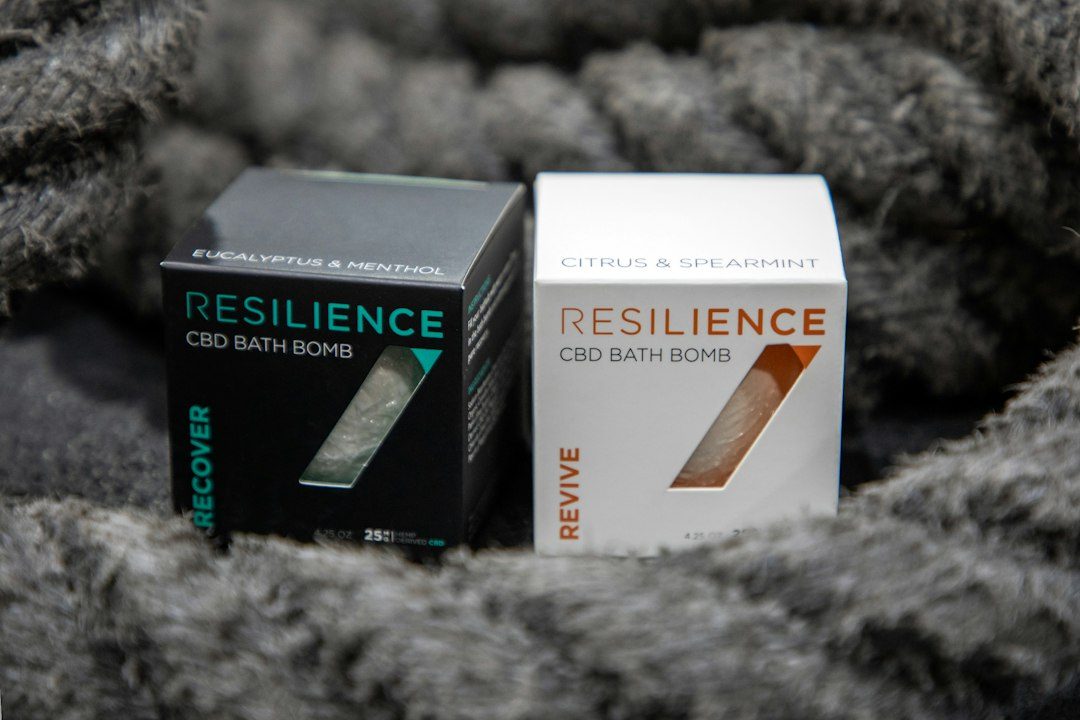
Outer cartons and paperboard boxes are typically not the compliance layer themselves — the bottle, pouch, or blister inside carries the CR and tamper-evident functions — but the carton is usually where the required label content and warning statements live, since it has room a small bottle label doesn’t.
What the Label and Closure Actually Need to Prove
Child-resistant certification isn’t a marketing claim — it’s a lab result. The actual test protocol lives in the federal regulation 16 CFR 1700.20 (under the Poison Prevention Packaging Act): packages go through a sequential test with panels of young children and a separate test with adults, and a passing package is one the vast majority of young test children can’t open in a set time, while most adults in the senior-age test group can open and properly reseal it. Industry also uses ASTM D3475, a classification standard that defines consistent terminology and package-type categories (like ‘reclosable’ or ‘unit packaging’) for CR packaging — but D3475 itself doesn’t run the test; it just classifies the package type that was tested under 16 CFR 1700.20. Ask your packaging supplier for the actual 1700.20 test report, not just a verbal assurance or a D3475 category label.
On the label side, expect to need: the amount of CBD (and total THC) per serving and per package, a batch or lot number tied to testing records, manufacturer or distributor contact information, a scannable QR code or short URL linking to the current Certificate of Analysis, and any state-mandated warning statement (several states require specific wording, not just ‘consult your doctor’). Because the FDA has not finalized a specific regulatory framework for CBD in foods and supplements, state agencies — not the FDA — are the ones actively enforcing packaging and labeling rules right now, and those rules vary enough that a Florida-compliant label can fail an Ohio or Texas review.
Tips / Common Mistakes
Don’t assume one package design covers every state you sell in — if you ship nationally, design to the strictest applicable rule (usually full CR certification plus opacity) rather than the loosest one. Don’t rely on a clear plastic jar for edibles just because it photographs well; several states explicitly restrict packaging that makes a cannabinoid product resemble ordinary candy or snack food. Don’t let your COA link go stale — a QR code pointing to an outdated or expired lab report is a common reason products get flagged during retailer or state spot-checks. And don’t skip test documentation from your packaging vendor; a closure that’s merely described as ‘ASTM D3475 classified’ or ‘child-resistant style’ isn’t the same as one that has actually passed 16 CFR 1700.20 panel testing — ask for the test report, not just the classification label.
Explore more: more packaging materials guides.
CBD and hemp packaging compliance FAQs
Does all CBD packaging need to be child-resistant?
Not universally — requirements depend on the state and product type. Edibles, tinctures, and concentrates are the categories most commonly required to use CR packaging, while some states exempt ready-to-drink beverages. Check the rules for every state you sell into.
What packaging standard do regulators actually test against?
The federal test protocol is 16 CFR 1700.20 under the Poison Prevention Packaging Act, which specifies the child and adult panel testing a package must pass. ASTM D3475 is a separate classification standard that categorizes types of child-resistant packages — it doesn’t replace the 1700.20 test. Ask any packaging supplier for a 1700.20 test report, not just a classification label.
Can I use clear packaging for CBD products?
You can for some categories, but many states restrict clear or visually appealing packaging for edibles specifically, since it can make a cannabinoid product look like regular candy or food to a child.
Is a QR code to a Certificate of Analysis legally required?
Several states now require it or something equivalent (like a short link), and most retailers and marketplaces expect it even where it isn’t strictly mandated. Keep the linked COA current — an expired one is a common compliance flag.
Find the Right Packaging Supplier
Search the free Packaura supplier directory — filter by material, certification, and location to find vetted suppliers. Search the Supplier Directory.
Want packaging news in your inbox? Subscribe to the free newsletter.
Photo by Resilience CBD on Unsplash.