
Electronics don’t just need to survive a drop — they need to survive static discharge, vibration, and crushing pressure from stacked pallets, often all in the same shipment. Get the packaging wrong and you’re looking at fried circuit boards, cracked screens, or a return that costs more than the product was worth.
This guide breaks down the three material decisions that matter most: which anti-static bag actually shields against ESD (versus just resisting it), which foam type fits your product’s sensitivity and weight, and which corrugated box rating holds up under real warehouse and carrier handling.
Quick Answer
For most electronics, use a metallized static-shielding bag (not a pink antistatic bag) directly against the device, wrap it in verified static-dissipative or conductive foam sized to the product’s sensitivity, and ship in a double-wall corrugated box rated at least 32 ECT. Add void fill so nothing shifts in transit.
Anti-Static Bags: Pink Poly vs. Metallized Shielding
These two bag types look similar but do different jobs, and mixing them up is one of the most common electronics-shipping mistakes. Pink antistatic bags are made from polyethylene with an antistatic additive. They keep the bag’s own surface from generating static charge, which is fine for handling components inside an ESD-controlled work area — but the additive can wear off over time, and the bags don’t block outside static from reaching the contents. They offer no real shielding.
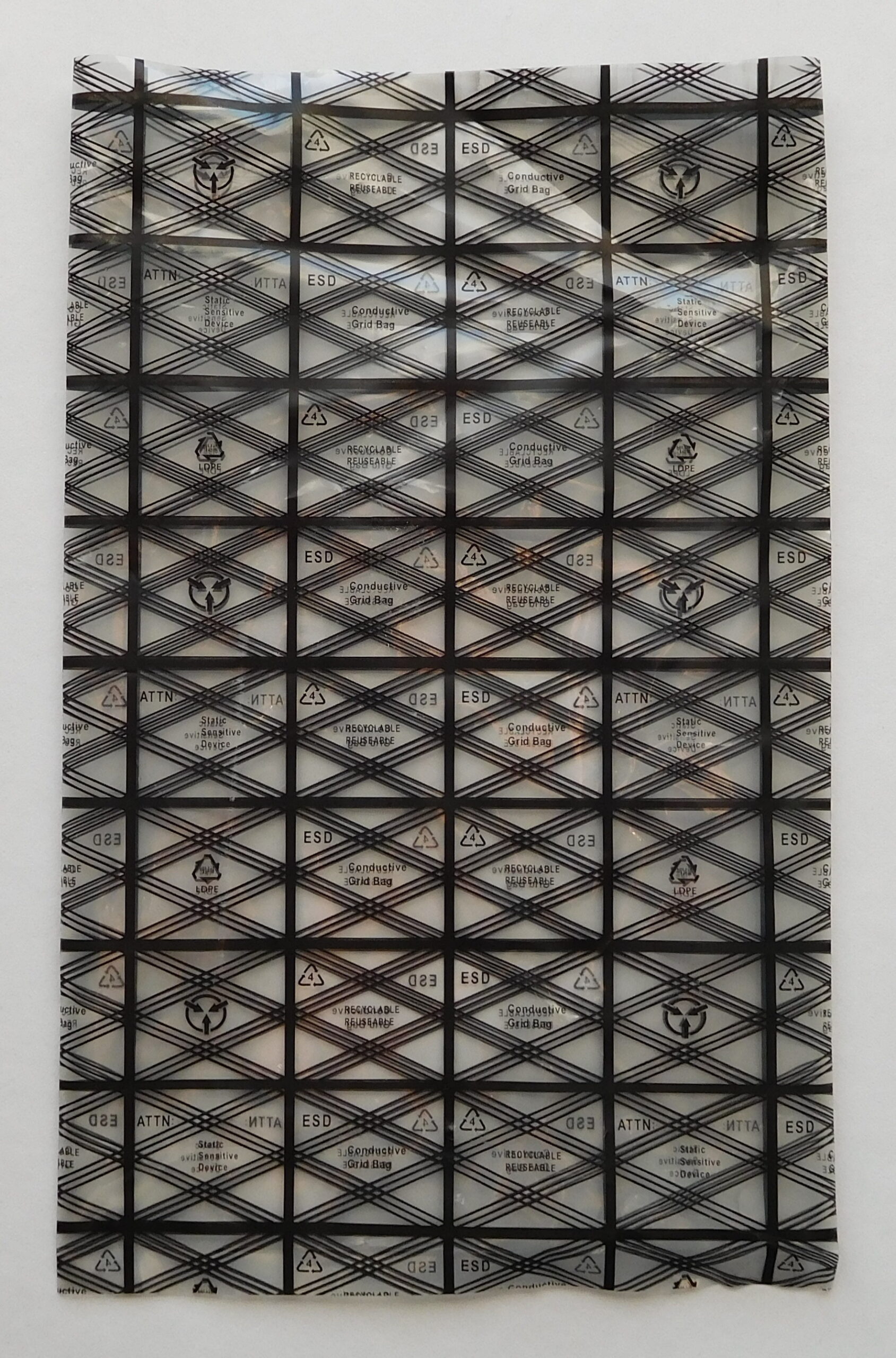
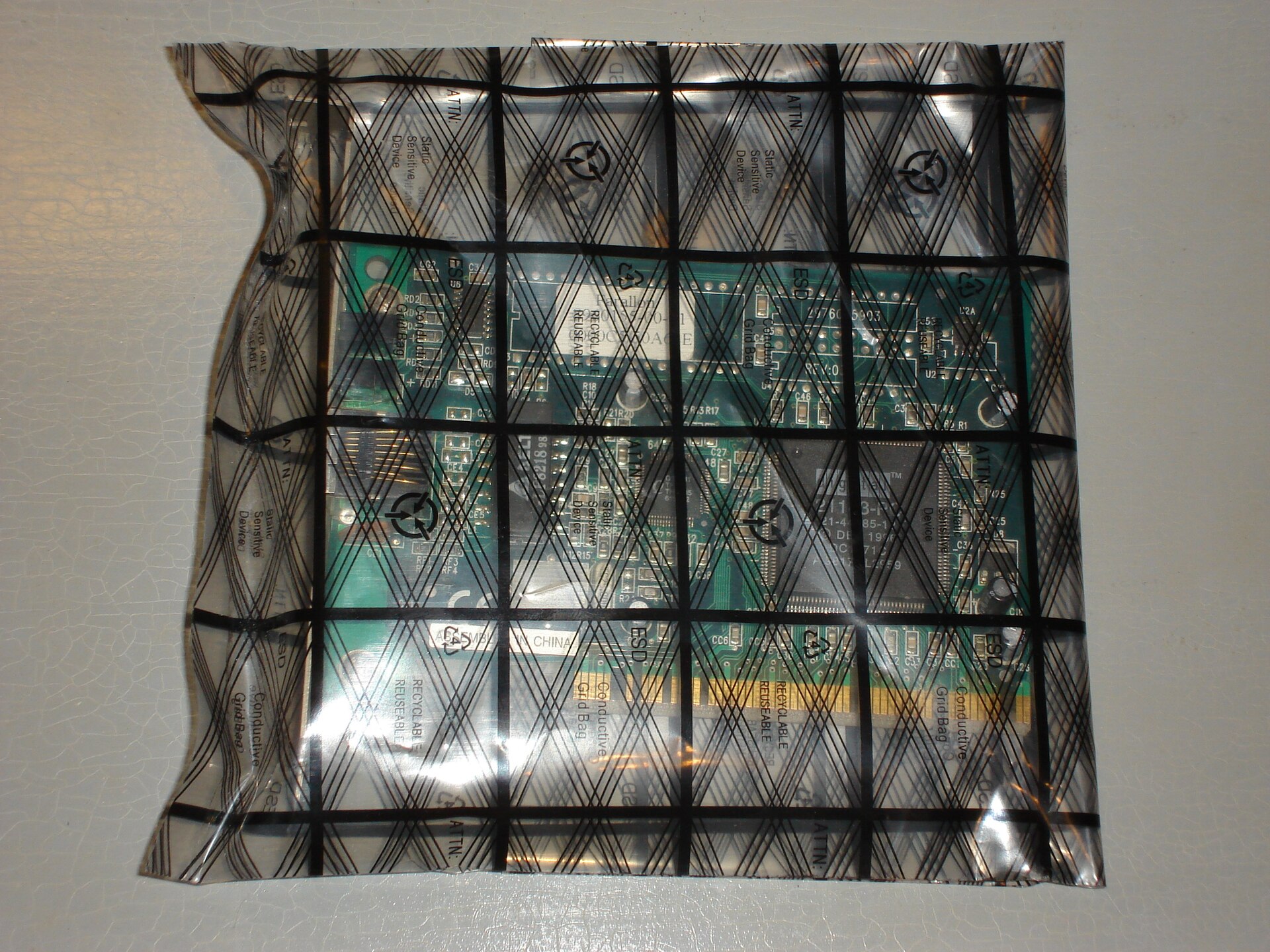
Metallized static-shielding bags add a thin metal layer (usually vapor-deposited aluminum) laminated between polyester and polyethylene layers, creating a Faraday cage effect. A static charge from outside the bag travels around the metal layer instead of through the component inside. Under ANSI/ESD S541, shielding bags are expected to limit the discharge reaching enclosed items to a very small threshold (on the order of 20 nanojoules or less) — well below what it takes to damage sensitive components.
Rule of thumb: use pink poly bags only for low-sensitivity items already inside a controlled facility. For anything shipping outside that environment — circuit boards, drives, RAM, motherboards, sensors — use metallized shielding bags.
Choosing the Right Foam
Foam serves two jobs at once: cushioning against shock/vibration and, in some formulations, controlling static. The three main categories are conductive foam, static-dissipative foam, and plain foam with no static-control properties — and it’s worth being precise about which is which, because color alone doesn’t guarantee performance.
Conductive foam is polyethylene foam loaded with carbon, giving it a black color and a surface resistance below roughly 1×10^4 ohms — the conductive threshold under ANSI/ESD S541. Because it’s conductive enough to form its own Faraday-cage-like barrier, it’s the strongest static protection of the three — but that same conductivity means exposed battery contacts or pins touching the foam can drain a battery or short a connection, so use it only where that risk doesn’t apply (e.g., boards without exposed live contacts).
True static-dissipative foam is defined under ANSI/ESD S541 by surface resistance, roughly 1×10^4 ohms up to just under 1×10^11 ohms, dissipating charge slowly and safely without the short-circuit risk of conductive foam. This is what you want for finished devices, cables, and assemblies with exposed contacts. The catch: pink ‘anti-static’ foam is a different ESD category. It gets its low-charging (antistatic) property from a surfactant additive applied during manufacturing, which reduces static generation from handling but isn’t the same thing as — and isn’t tested against — the resistance-based dissipative spec. A pink foam pad can be genuinely low-charging and still not fall within the ANSI/ESD S541 dissipative-resistance range, and any protective effect it does have can fade further as the surfactant migrates or wears off with storage and handling, with no visible change to the foam. Don’t treat pink as a stand-in for dissipative — check the supplier’s spec sheet for a stated surface-resistance figure, and for compliance-sensitive or long-term use, prefer foam explicitly tested and labeled as static-dissipative under S541 rather than relying on color as a proxy.
Plain polyethylene (PE) foam, with no static-control additive, offers cushioning only. It’s fine as an outer wrap or filler layer around a product that’s already sealed in a shielding bag, but never rely on it alone for anything static-sensitive. For heavier items, closed-cell PE foam gives better structural support; lighter, more delicate electronics often do better with polyurethane foam, which compresses more gently on impact.
Picking the Right Corrugated Box
Corrugated boxes are rated two different ways, and confusing them leads to either over-spending or under-protecting. Edge Crush Test (ECT) measures how much stacking/compression weight the box can bear before the walls buckle — this is what matters when boxes sit on pallets or in stacked warehouse storage. Burst (Mullen) strength measures resistance to puncture and rupture from a sharp or concentrated impact.
For electronics moving through standard parcel carriers and palletized freight, ECT is generally the more relevant spec, since compression during stacking and transit is the more common failure mode than puncture. A 32 ECT single-wall box is a reasonable baseline for lighter electronics accessories; heavier or higher-value equipment (monitors, appliances, networking gear) does better in double-wall board at 44 ECT or higher. If your shipment also faces rough small-parcel handling — sorting belts, drops, tight parcel lockers — pair ECT with an adequate burst rating (200# class or higher) rather than relying on ECT alone.
Box size matters as much as strength: leave enough clearance around the wrapped, bagged product for at least 2 inches of cushioning material on all sides, and avoid boxes that are only marginally larger than the item — that’s when foam gets compressed flat and stops absorbing shock.
Tips / Common Mistakes
Don’t substitute bubble wrap for shielding: bubble wrap and packing peanuts cushion but do nothing for ESD, so they should only ever go around an already-bagged component, never touch bare boards directly.
Don’t assume pink means dissipative: pink foam’s low-charging (antistatic) property comes from a surfactant coating and is a different ESD category from resistance-based static-dissipative foam — it isn’t guaranteed to fall within the ANSI/ESD S541 dissipative-resistance range even when new, and any protection it does offer can fade further with age and handling. A spec sheet confirming surface resistance matters more than the color for anything static-sensitive or compliance-audited.
Don’t reuse worn antistatic bags: the antistatic coating on pink poly bags degrades with handling and time, so a bag that’s been reused several times may no longer meet ESD-safe surface resistance even if it looks fine.
Don’t skip void fill: a well-shielded, well-cushioned product can still fail if it’s free to slide and slam against the box wall during transit — always fill remaining space with air pillows, kraft paper, or foam-in-place.
Don’t oversize the box: too much extra space lets contents shift and defeats the cushioning; too little space compresses the foam and eliminates its protective margin.
Explore more: more packaging materials guides.
Packaging materials for shipping electronics FAQs
Do I need an anti-static bag if the electronics are already in a plastic retail case?
If the device is fully enclosed in its own housing with no exposed circuitry or connectors, a sealed case often provides enough protection on its own. Bare boards, exposed connectors, or open modules still need a static-shielding bag regardless of outer packaging.
Is pink foam the same as static-dissipative foam?
No, not automatically. Pink foam is treated with a surfactant additive that lowers static generation from handling (an ‘antistatic’ or low-charging property), but that’s a different ESD category from static-dissipative, which ANSI/ESD S541 defines by surface resistance (roughly 1×10^4 ohms up to just under 1×10^11 ohms). A pink foam pad isn’t guaranteed to fall within that resistance range even when new, and any low-charging performance it does have can fade further as the surfactant migrates or wears off with handling, without any visible change. For compliance-sensitive or long-term use, don’t rely on color — check the supplier’s spec sheet for a stated surface-resistance figure and prefer foam explicitly tested and labeled as static-dissipative.
What ECT rating should I use for shipping a laptop or monitor?
Double-wall corrugated at 44 ECT or higher is a common baseline for higher-value or heavier electronics like laptops and monitors, especially if the box will be palletized or stacked in a warehouse before final-mile delivery.
Can I use bubble wrap instead of anti-static foam?
No. Standard bubble wrap provides cushioning but has no static-dissipative or shielding properties, so it should be used as an outer cushioning layer around an already-shielded item, not as a substitute for anti-static bags or foam.
Source Smarter With Packaura Direct
Find packaging suppliers, surplus inventory, and certification — all on Packaura Direct. Try Packaura Direct.
Want packaging news in your inbox? Subscribe to the free newsletter.
Photo: Tpdwkouaa / CC BY-SA 4.0, via Wikimedia Commons.