
A corrugated box’s spec sheet is an engineering document, not a formality. Flute profile, wall count, edge crush rating, and linerboard grade determine whether a case survives a cross-country LTL haul and a warehouse stack six pallets high, or arrives crushed on arrival.
This guide breaks down every term you’ll see on a corrugated specification or certification stamp — flute thickness, ECT vs. burst (Mullen), linerboard grades including the oft-confused cohesive linerboard, box styles, and print methods — so you can specify a case that matches the load without overpaying for strength you don’t need.
Quick Answer
A corrugated box specification is the combination of flute profile, wall count (single, double, or triple), a strength rating — edge crush test (ECT), such as 32 ECT, or burst/Mullen, such as 200# — and linerboard composition. Together they define how much weight a case can stack, how well it cushions contents, and how it prints. The default for general shipping is single-wall C-flute board rated ECT 32, flexo-printed, with a kraft or recycled-content liner facing.
What Is a Corrugated Box, Exactly?
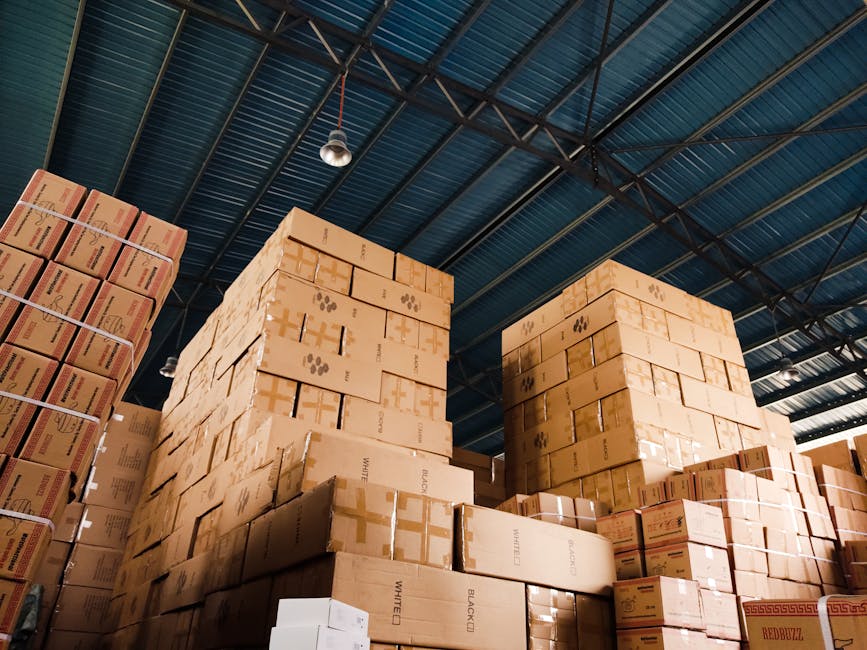
Corrugated fiberboard — what most people just call cardboard — is a fluted (wavy) inner layer called the medium, glued between flat sheets called linerboard. That fluted layer is what separates a corrugated box from a folding carton: a cereal box is flat single-ply paperboard with no flute, while a shipping case always has at least one corrugated layer giving it rigidity and cushioning.
“Corrugated box” and “corrugated carton” are used interchangeably in the packaging trade — both refer to the same fluted shipping case, and a specification written for one applies identically to the other. The terms diverge only in retail packaging, where “carton” sometimes means a folding (non-corrugated) display box.
Flute Profiles and Corrugated Thickness
Flute profile is the single biggest driver of a box’s thickness, cushioning, and stacking strength. The standard industry profiles, from thickest to thinnest: A flute (roughly 4.8mm / 3/16in, about 33 flutes per foot) gives the best cushioning and is common for fragile or heavy industrial goods; C flute (roughly 4.0mm / 5/32in, about 39 flutes per foot) is the most common shipping-case profile in the U.S.; B flute (roughly 3.2mm / 1/8in, about 47 flutes per foot) balances strength and die-cutting; E flute (roughly 1.6mm / 1/16in, about 90 flutes per foot) and F flute or “micro-flute” (roughly 0.8mm / 1/32in, about 125 flutes per foot) are thin, retail-friendly profiles used for mailers, cosmetics, and shelf-ready packaging.
Double-wall board (BC, EB, AC) stacks two flute profiles with a shared liner between them, roughly doubling single-wall caliper and compression strength — this is the usual spec for heavy products, long-distance LTL freight, or export shipments. Our packaging supply chain management guide covers how to match flute and wall count to a distribution network’s handling profile.
ECT vs. Burst Strength: Which Test Applies?
Two test standards dominate corrugated specification. Edge crush test (ECT) presses a one-inch-wide strip of board on its edge, perpendicular to the flutes, until it buckles — the result is reported in pounds per linear inch and correlates closely with real-world stacking failure. Burst (Mullen) testing instead measures how much pressure, in pounds per square inch, the flat board can withstand before puncturing — a better proxy for rough-handling and impact damage than for stacking.
ECT 32 is the workhorse single-wall rating for general shipping cases: a one-inch strip of ECT-32 board resists 32 lb of edgewise force before it fails. ECT 44 and ECT 51 single-wall, or ECT 48 and ECT 60+ double-wall, step up for heavier loads, taller pallet stacks, or longer transit times. Burst ratings (200#, 275#) still appear on legacy specifications and in a handful of regulatory tariffs, but most new shipping-case specs default to ECT because it maps more directly to warehouse racking and over-the-road compression.
Linerboard Grades, Recycled Content, and Cohesive Linerboard
Linerboard — the flat facing glued to each side of the flute — ranges from virgin or mostly-virgin kraft to recycled grades with high post-consumer fiber content; test liner is a recycled grade common in European specifications. Most U.S. corrugated pairs a virgin kraft outer liner with recycled medium and inner liner. Sustainability-driven brands increasingly write minimum recycled-content thresholds and FSC (Forest Stewardship Council) certification directly into their box specs, and major suppliers such as International Paper, Smurfit Westrock, and Packaging Corporation of America publish material declarations to support those claims.
“Cohesive linerboard” is a different, specialty product and worth distinguishing clearly: it’s a kraft paperboard coated with a latex cohesive layer that seals to itself under light pressure, with no heat, tape, or glue needed. It isn’t the structural liner glued to a flute inside a standard shipping box — it’s typically sold as flat sheets or rolls (common basis weights include 33#, 42#, 56#, and 69#) for self-sealing mailers and padded bags protecting books, DVDs, and automotive parts in transit. If a spec calls for “cohesive linerboard,” it’s describing a self-seal mailer material, not the liner inside an RSC shipping case.
Style Selection: RSC, FOL, and Specialty Designs
Regular slotted container (RSC) is the workhorse style — four flaps of equal length meeting at the centerline when the box is closed. Full overlap (FOL) boxes extend the major flaps to fully cover the box’s length, adding stacking and puncture resistance at the cost of a bit more board. Half-slotted containers (HSC) omit one set of flaps for specialty or tray applications, and die-cut specialty styles enable retail-ready packaging and automated case-erecting. As fulfillment-center automation has spread, more specifications call out styles that machine-erect without manual flap-folding.
Reading the Box Manufacturer’s Certificate (Cert Stamp)
Every compliant corrugated shipping case carries a certification stamp — a round or rectangular mark on the bottom flap — and it’s the fastest way to verify a box actually meets its written specification. The stamp lists wall count and board type, the strength rating as either an ECT value (“32 ECT”) or a Mullen burst value (“200#”), the maximum gross weight the box is rated to hold, the maximum combined outside dimensions (length + width + height), and the manufacturer’s identification. Procurement and QC teams should check this stamp against the purchase order on every incoming lot — a mismatch between the stamp and the spec is the quickest sign a supplier substituted a lighter board.
Corrugated Cardboard Properties Beyond Strength
Beyond ECT and burst, engineers specify several other measurable properties: box compression strength (how the assembled case performs under a static top load, not just a strip of board), flat crush resistance (how well the flutes resist being crushed before converting), moisture content (corrugated loses a significant share of its strength as humidity rises, which is why high-humidity routes often call for a step up in ECT), and cushioning or shock absorption, driven mostly by flute height. Corrugated fiberboard is also anisotropic — its edge crush, bending stiffness, and tear resistance differ depending on whether you’re measuring along or across the flute direction, which is why box blanks are always cut and scored with a specific grain orientation in mind.
Print Methods: Flexo, Direct Print, and Litho-Lam
Most corrugated boxes print flexographically, directly on the linerboard, supporting roughly four to six colors with moderate registration accuracy — fine for shipping labels and basic branding. High-graphic retail boxes instead use lithographic preprint laminated to a corrugated substrate (litho-lam), which achieves near-photographic quality at a higher per-unit cost. Digital direct-to-corrugated printing from suppliers like HP, Bobst, and Koenig & Bauer now enables short-run, fully customized graphics without the cost of plate setup. Our ecommerce packaging strategies guide covers how interior printing, inserts, and graphic design choices layer onto a corrugated spec to build a cohesive unboxing experience.
Photos
corrugated box specifications FAQs
What does ECT 32 mean?
ECT 32 means a one-inch-wide strip of that corrugated board resists 32 pounds of edgewise force before buckling. It’s the standard single-wall grade for general shipping cases; heavier or longer-transit loads move up to ECT 44, 51, or double-wall grades.
What is the difference between B flute and C flute?
B flute (about 3.2mm) is thinner, with more flutes per foot, offering good crush resistance and a smooth surface for printing and die-cutting. C flute (about 4.0mm) is slightly taller and is the most common general-shipping profile in the U.S., trading a bit of printability for more cushioning.
Should I specify ECT or burst strength?
Specify ECT for most modern shipping-case designs — it correlates more closely with stacking and compression failures in racking and transit. Burst (Mullen) ratings still appear on legacy specifications and some regulated categories where puncture resistance matters more than stacking.
Is cohesive linerboard the same as the liner inside my shipping box?
No. Cohesive linerboard is a specialty kraft paperboard coated with a self-sealing latex layer, used for flat mailers and padded bags that seal without tape or glue. The linerboard glued to the flute inside a standard corrugated shipping box is a structural facing with no cohesive coating.
How thick is corrugated cardboard?
Thickness depends entirely on flute profile: F flute runs about 0.8mm, E flute about 1.6mm, B flute about 3.2mm, C flute about 4.0mm, and A flute about 4.8mm for single-wall board. Double-wall combinations roughly add two single-wall thicknesses plus a shared liner.
What’s the difference between a corrugated box and a corrugated carton?
In the shipping-case industry, “box” and “carton” are interchangeable terms for the same fluted container, and a specification for one applies to the other. “Carton” more rarely refers to a flat, non-corrugated folding carton used for retail display.
What’s actually printed on a box’s certification stamp?
The Box Manufacturer’s Certificate lists the wall/board type, strength rating (ECT or Mullen burst), maximum gross weight, maximum combined outside dimensions, and the manufacturer’s identification — the fastest way to verify an incoming box matches its purchase spec.
How recyclable is corrugated board?
The U.S. cardboard recycling rate has run in roughly the 70-75% range in recent AF&PA reporting, among the higher rates of any packaging material. Most boxes use a mix of virgin and recycled fiber, commonly 30-100% recycled content depending on grade.
Find the Right Packaging Supplier
Search the free Packaura supplier directory — filter by material, certification, and location to find vetted suppliers. Search the Supplier Directory.
Want packaging news in your inbox? Subscribe to the free newsletter.