
Choosing between rigid and flexible packaging is one of the first decisions a brand makes when bringing a product to market, and it shapes everything downstream: unit cost, shipping weight, shelf presence, and how sustainable your packaging actually is once you factor in materials and transport.
This guide breaks down what actually separates the two formats, when each one makes sense, and the questions to ask before you commit to tooling, molds, or a packaging line.
Quick Answer
Choose rigid packaging (bottles, jars, cans, cartons, tubs) when your product needs maximum physical protection, a premium shelf presence, or a format that supports reuse. Choose flexible packaging (pouches, bags, films, sachets) when minimizing material and shipping weight, saving shelf and storage space, or offering easy-open and resealable convenience matters more than structural rigidity.
What Separates Rigid and Flexible Packaging
Rigid packaging holds its shape independent of what’s inside it. Think glass or plastic bottles, jars, aluminum cans, folding cartons, and molded tubs — all built with enough structural integrity to stack, ship, and sit on a shelf without support. Because the material itself does the work of protecting the product, rigid formats tend to use more raw material per unit and cost more to produce and ship.
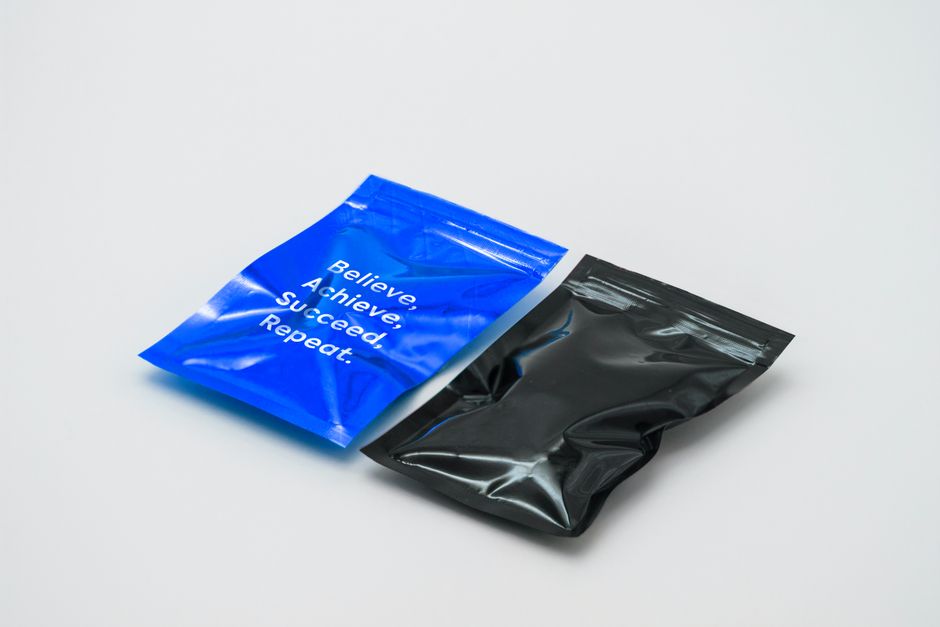
Flexible packaging is built from films, foils, or laminated paper that flexes and conforms — stand-up pouches, flat bags, sachets, and rollstock. It typically uses less material for the same volume of product, which lowers material cost and shipping weight, and it can be printed edge-to-edge for strong shelf graphics. The tradeoff is that flexible formats generally offer less resistance to crushing, puncture, and rough handling than a bottle or can.
Neither format is universally ‘better’ — the right choice depends on what your product needs to survive distribution, what your customer expects to feel when they pick it up, and what your production volume and budget can support.
How to Decide: The Factors That Actually Matter
Start with product protection. Liquids, carbonated beverages, fragile or high-value items, and anything sensitive to crushing usually call for rigid packaging — a glass jar or HDPE bottle simply resists impact and pressure better than a film pouch. If your product is a powder, snack, coffee, pet food, or another item where oxygen, moisture, or light exposure is the bigger threat, a high-barrier flexible pouch can protect it just as well, and modern barrier films have closed much of the shelf-life gap that used to favor rigid containers.
Weigh shipping and storage economics next. Flexible packaging generally weighs less and ships flat or nearly flat before filling, which reduces freight costs and warehouse footprint compared to pre-formed rigid containers that ship mostly empty air. If you’re shipping direct-to-consumer or across long distances, that weight and volume difference compounds quickly.
Consider brand and shelf strategy. Rigid packaging still reads as premium in categories like spirits, skincare, and fragrance, where the container itself is part of the perceived value — and it supports refill or reuse programs more naturally. Flexible packaging tends to win on convenience features like resealable zippers, tear notches, and stand-up pouches that maximize shelf-facing graphics in a smaller footprint, which is why it’s become the default for snacks, coffee, and single-serve products.
Factor in sustainability with nuance rather than a blanket assumption. Flexible formats generally use less material and less energy in transport because they’re lighter and more compact, but many multi-layer laminate films are harder to recycle through standard curbside streams. Rigid materials like glass, aluminum, and PET generally have more established recycling infrastructure and higher real-world recycling rates, even though they use more material and cost more to transport. If recyclability is a marketing claim you plan to make, verify it against your specific material and your target market’s local recycling capabilities before you commit.
Finally, check production reality: minimum order quantities, tooling costs, and filling-line compatibility. Rigid packaging usually requires mold or bottle tooling investment and higher minimum order quantities, while flexible pouches and bags can often be sourced in smaller runs with lower upfront tooling costs, which matters a lot for early-stage or seasonal products.
Tips and Common Mistakes
Don’t pick a format based on what your competitors use without checking whether it fits your product’s actual failure modes — a competitor’s pouch might work for their shelf-stable snack but fail for your liquid or carbonated product. Test real samples through your actual shipping and handling conditions, not just a lab drop test, since e-commerce parcel shipping is rougher on packaging than retail distribution. Get a firm answer on recyclability claims from your packaging supplier in writing before printing ‘recyclable’ on the package, since flexible laminates and mixed-material rigid containers often aren’t accepted in standard curbside programs even when a claim seems reasonable. And price the total landed cost — material, tooling, fill-line changes, and freight — rather than comparing per-unit material cost alone, since that’s where flexible packaging’s savings usually show up and where rigid packaging’s premium becomes clearest.
Explore more: Explore more packaging materials guides.
Rigid vs Flexible Packaging FAQs
Is flexible packaging always cheaper than rigid packaging?
Usually per-unit material and shipping costs are lower for flexible packaging because it uses less material and weighs less, but total cost depends on your production volume, required barrier properties, and existing filling equipment. Get quotes for your specific product before assuming.
Can flexible packaging protect a product as well as rigid packaging?
For oxygen, moisture, and light protection, high-barrier flexible pouches can perform comparably to rigid containers for many dry and shelf-stable products. For crush resistance, impact protection, and carbonated or pressurized products, rigid packaging still generally holds up better.
Which packaging format is more sustainable, rigid or flexible?
It depends on the metric. Flexible packaging typically uses less material and creates a lighter shipping footprint, while rigid materials like glass and aluminum generally have stronger existing recycling infrastructure and higher actual recycling rates. Neither format wins outright — check the specific material and your local recycling access.
Can I switch from rigid to flexible packaging without changing my product formula?
In most cases yes, but you’ll need to validate barrier performance (oxygen, moisture, light) and shelf-life testing for the new format, since packaging protection directly affects product stability even when the formula itself hasn’t changed.
Source Smarter With Packaura Direct
Find packaging suppliers, surplus inventory, and certification — all on Packaura Direct. Try Packaura Direct.
Photo by Vitalii Abakumov on Pexels.