
If you’re choosing a printing ink for packaging that will touch food, or sits close enough to it that migration is a real possibility, you’ve probably run into a common misconception: that one ink technology is “FDA-approved” and the other isn’t. That’s not how it works. FDA doesn’t certify UV-cured or solvent-based inks as categories at all.
This guide walks through how FDA actually regulates printing inks on food packaging, where each ink type’s real compliance risk lives, and what to check before you sign off on a supplier’s ink system.
Quick Answer
Neither UV-cured nor solvent-based ink is categorically FDA-compliant or non-compliant. FDA regulates the individual chemical substances in an ink (resins, pigments, photoinitiators, solvents) under the indirect food additive rules, mainly 21 CFR 175.300, plus Food Contact Notifications (FCNs) and GRAS determinations, not the curing method itself. Critically, an FCN only covers the specific manufacturer or supplier named in it (and that supplier’s customers) under 21 CFR 170.100, so no ink maker gets to rely on someone else’s FCN just because their formulation uses the same listed chemistry; they need their own FCN or another valid basis. UV-cured inks need properly selected, fully-cured photoinitiators to avoid migration; solvent-based inks need complete drying so residual solvents don’t transfer to food. Either one can meet food-contact requirements, or fail to, depending on the specific formulation, who supplies it, and how well it’s cured or dried.
How FDA Actually Regulates Printing Inks
Most food packaging is printed on the outside, the non-food-contact side, which is why most inks are never evaluated as “food additives” at all: if an ink component has no reasonable expectation of migrating into the food at more than a trace level, it falls outside FDA’s food additive definition. The usual pathway for compliance is 21 CFR 175.300, “Resinous and polymeric coatings,” which covers coatings (including many inks that function as coatings) used as, or near, the food-contact surface, and requires that each substance in the formulation be either generally recognized as safe (GRAS), regulated elsewhere in 21 CFR and used within those limits, or specifically listed in 175.300 itself.
The real-world risk isn’t the ink sitting where it was printed, it’s set-off: ink transferring from the printed outer surface of one sheet, web, or stacked container onto the food-contact inner surface of the next one during storage or converting. FDA doesn’t treat that as an intentional additive use, but if set-off happens, any migrating substance still has to be safe at the levels reached. That’s why ink formulators lean on functional barriers (materials like foil, and in many cases PET or glass, that are recognized as effectively blocking migration) and on FDA’s threshold of regulation policy, which lets substances migrating at very low dietary concentrations skip full food-additive review.
For inks printed directly onto a food-contact surface with no barrier at all, formulators typically need a specific Food Contact Notification (FCN) covering every substance in the formulation, or confirmation that each substance already has prior sanction, GRAS status, or coverage under an existing indirect additive regulation. A key wrinkle, set by 21 CFR 170.100: an FCN is legally effective only for the specific manufacturer or supplier named in it (and that supplier’s customers using the substance as supplied), not for any company that happens to use the same chemical. Using an FCN-listed substance is not, by itself, a valid regulatory basis; a different supplier using an identical-looking formulation still needs its own FCN or other valid regulatory basis to make the same claim.
UV-Cured Inks: What to Check
UV-cured inks dry almost instantly under UV light rather than through evaporation, using photoinitiators to trigger polymerization. That speed is a real production advantage, but photoinitiators are also where UV ink’s food-contact history gets bumpy: in 2005, the photoinitiator ITX (isopropylthioxanthone) was found to have migrated from UV-cured offset printing ink into packaged milk through set-off, a widely reported incident that pushed the industry toward reformulation. Since then, ink makers have developed “low migration” UV ink systems designed to stay below relevant migration limits even when set-off occurs.
On the regulatory side, a notable but narrowly-scoped clearance came through FCN 772, obtained in 2008 by the RadTech Food Contact Notification Alliance: it covers a defined list of acrylate monomers (including tripropylene glycol diacrylate and trimethylolpropane triacrylate) and an optional photoinitiator for direct food contact in UV- and EB-cured coatings or inks, but only when used by Alliance members or their customers sourcing that chemistry from them. It is not a blanket industry approval, and simply using a chemical that happens to appear on the FCN 772 list does not make an ink compliant. By law (21 CFR 170.100), an FCN is effective only for the manufacturer or supplier identified in it, so any ink maker outside the Alliance, even one using the exact same monomers, still needs its own FCN, or another valid basis such as GRAS status or an existing indirect additive regulation, before claiming direct food-contact clearance. In practice, when vetting a UV-cured ink, ask the supplier directly what regulatory basis covers their specific formulation (whether they can claim FCN 772 coverage as an Alliance member or customer, or rely on something else), and whether the curing dose specified for your press and substrate is actually being hit in production, since under-cured ink is the main way photoinitiator migration happens.

Solvent-Based Inks: What to Check
Solvent-based inks dry through evaporation of a carrier solvent, a mature technology with decades of use on flexible packaging, labels, and corrugated. Their compliance profile is more established, since many of their resins, pigments, and solvent systems are already covered by existing indirect food additive regulations or GRAS determinations. The risk that matters most here is residual solvent: if drying isn’t carried through to completion, whether because of line speed, dryer capacity, or ink film thickness, unevaporated solvent or retarder can remain in the printed layer and become a migration source through set-off, just like an under-cured UV ink.
When evaluating a solvent-based ink for food packaging, ask for documentation that the solvent system and resins are covered under applicable FDA indirect additive regulations for your substrate and contact conditions, and confirm the supplier has run residual solvent testing at your actual production speeds, not just lab conditions. A formulation that’s fine at pilot-line speed can leave excess solvent behind on a faster commercial line.
Tips / Common Mistakes
Don’t accept “FDA-approved ink” as a complete answer from a supplier, ask which regulation or FCN covers which substances, for which substrate and contact conditions, and whether your specific supplier is actually named in (or a customer under) that clearance, since compliance is formulation-specific, use-specific, and supplier-specific, not a blanket label. Don’t assume that because a competitor’s ink cites FCN 772 or a similar clearance, or because your supplier’s ink happens to contain the same acrylate monomers, your supplier is automatically covered, they aren’t unless they’re actually an Alliance member or that member’s customer. Don’t assume printing on the outside of a package means set-off risk doesn’t matter; it’s the single most common way ink ends up migrating into food. Don’t skip curing or drying verification on your actual production equipment, since a formulation validated at the ink maker’s test lab can behave differently at your line speed, dryer length, or UV lamp output. And don’t treat “low migration” as a formal certification, it’s a formulation approach, so ask what migration testing (and against which food simulant and limit) backs that claim.
Explore more: More packaging compliance guides.
UV-cured vs. solvent-based inks FAQs
Is UV-cured ink FDA-approved for food packaging?
Not as a blanket category, and not automatically. FCN 772, held by the RadTech Food Contact Notification Alliance, clears a specific list of acrylate substances for direct food contact, but under FDA’s rule on notification scope (21 CFR 170.100) that clearance applies only to Alliance members and their customers, not to every ink maker using the same listed chemistry. Merely using an FCN 772-listed substance doesn’t satisfy the regulation; a supplier outside that alliance needs its own FCN or another valid regulatory basis, and the ink still has to be properly cured to avoid migration.
Is solvent-based ink safer than UV-cured ink for food packaging?
Neither is inherently safer. Solvent-based inks rely on complete solvent evaporation to avoid residual solvent migration; UV-cured inks rely on properly selected, fully-cured photoinitiators to avoid migration. Both can meet FDA requirements when formulated, sourced, and processed correctly, and both can fail if drying or curing is incomplete.
Do I need a specific FDA clearance for every ink I use on food packaging?
It depends on whether the ink contacts food directly or indirectly, whether a functional barrier is present, and who your supplier is. Many inks comply because their substances are already covered under 21 CFR 175.300 or other indirect food additive regulations, or fall under FDA’s threshold of regulation policy; direct, unbarred contact usually requires substances with their own FCN naming your specific supplier, prior sanction, or GRAS status, since an FCN held by one company (such as FCN 772) doesn’t automatically cover a different supplier’s identical-looking formulation.
If my ink uses a substance listed in FCN 772, is it automatically compliant?
No. FCN 772 is effective only for the RadTech Food Contact Notification Alliance and its customers, per 21 CFR 170.100. A different supplier using the same monomer or photoinitiator still needs its own FCN, or another valid regulatory basis (GRAS status or an existing indirect additive regulation), before claiming direct food-contact clearance for that substance.
Find the Right Packaging Supplier
Search the free Packaura supplier directory — filter by material, certification, and location to find vetted suppliers. Search the Supplier Directory.
Want packaging news in your inbox? Subscribe to the free newsletter.
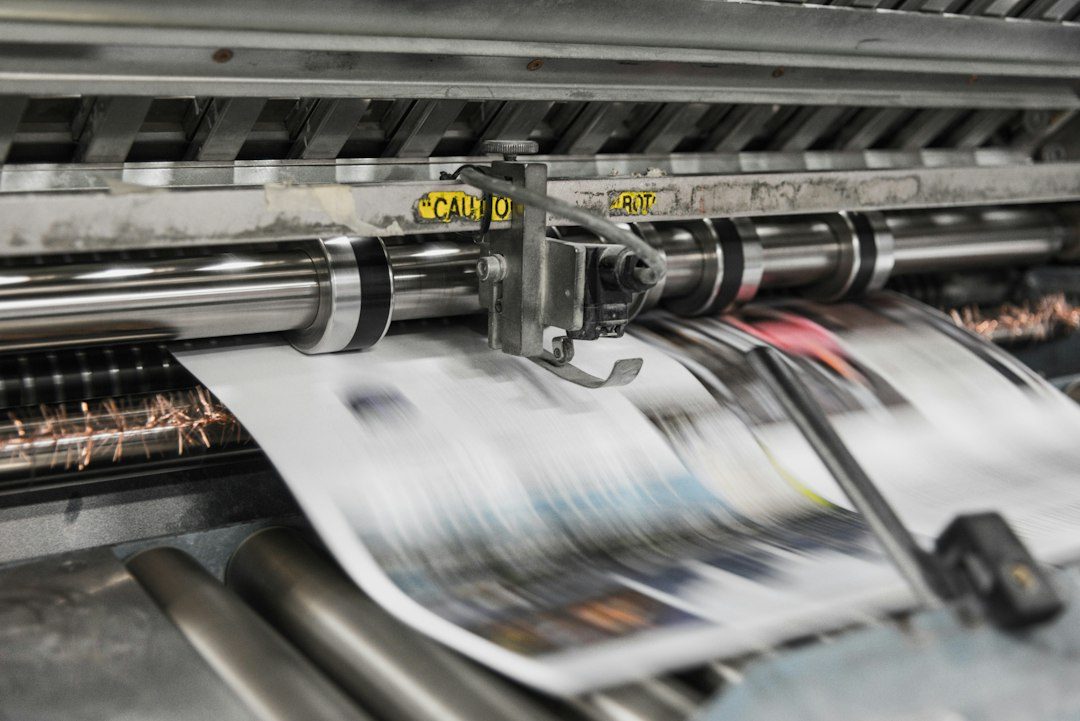
Photo by Bank Phrom on Unsplash.