
Compostable coffee bags sound like an easy sustainability win: swap your current stand-up pouch for a plant-based one and let customers compost it instead of tossing it. In practice, the switch touches every part of the package — the bag itself, the pouch format, the label stuck on the front, the zipper and valve, and what actually happens after a customer is done with it.
This guide covers how compostable coffee bags and pouches are made and certified, where compostable labels fit (or don’t), how to actually verify a supplier’s BPI certification instead of taking their word for it, and the mistakes that trip up roasters who move too fast. The goal is to help you make an informed call, not just a feel-good one.
Quick Answer
Compostable coffee bags and pouches are typically kraft paper laminated with a PLA (plant-based) or PBAT liner instead of a plastic or foil layer, certified under ASTM D6400 to break down in an industrial composting facility — not a backyard pile — within a defined window. To verify a supplier’s BPI claim is real, look up the exact product in BPI’s public certified-product catalog at products.bpiworld.org rather than relying on a logo or a PDF the supplier emails you.
How Compostable Coffee Bags and Pouches Are Made and Certified
Most compostable coffee bags pair a kraft paper outer layer with an inner liner made from PLA (polylactic acid, derived from plant starch) or PBAT, a compostable flexible film. Some converters also offer compostable films without the kraft paper look, for roasters who want a different shelf presence. Whatever the construction, zippers, degassing valves, labels, and inks all need to be compostable too — a bag with a compostable film but a conventional plastic valve, zipper, or label isn’t fully compostable, even if the marketing implies otherwise.
In North America, the certification to look for is BPI (Biodegradable Products Institute), which verifies compliance with ASTM D6400 — the standard for industrial compostability — and ASTM D6868 for products with a separate compostable coating or film layer over a biodegradable substrate. In Europe, the equivalent marks are TÜV Austria’s ‘OK Compost INDUSTRIAL’ and EN 13432. A separate, much smaller category is ‘home compostable’ (TÜV’s ‘OK Compost HOME’ or BPI’s home-compostable listing), which breaks down at lower backyard temperatures — most coffee pouches are industrial-compostable only and shouldn’t be marketed as backyard-safe. Since 2020, BPI certification has also required PFAS-free compliance, so a current BPI mark is a reasonable proxy for ‘no added forever chemicals’ as well as compostability.
Compostable Coffee Pouch Formats: Stand-Up, Flat-Bottom, and Tin-Tie
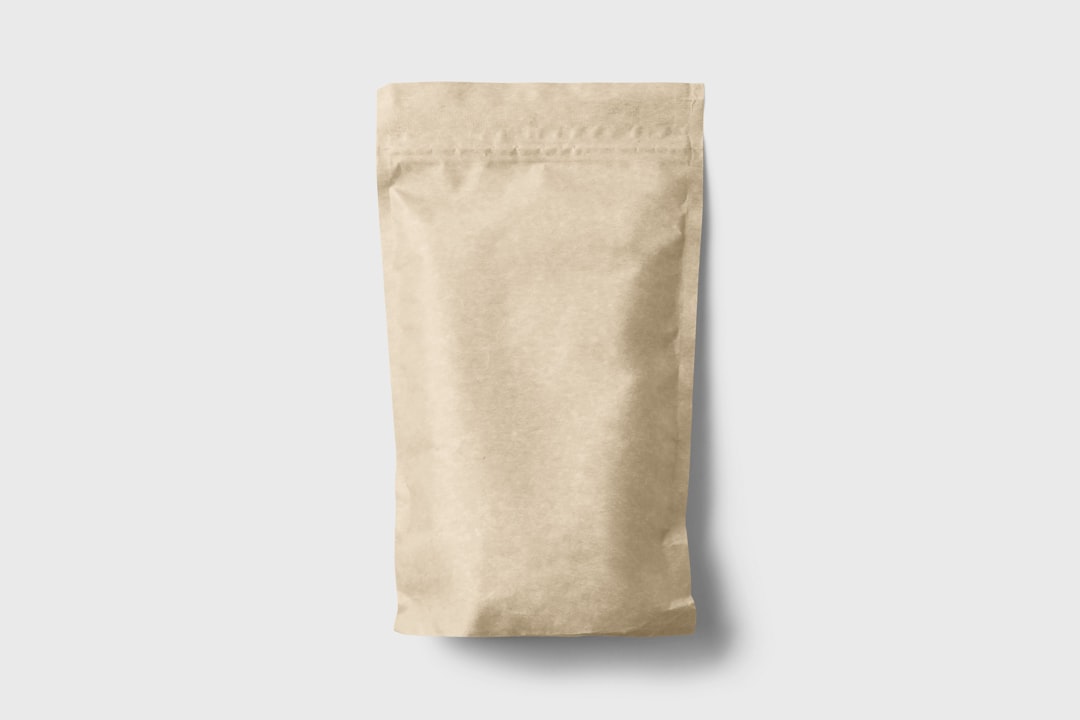
Compostable coffee pouches now come in most of the same formats as conventional flexible packaging. Stand-up pouches (SUPs) with a resealable zipper are the most common for retail bags, since they shelve well and let customers reseal between uses. Flat-bottom (box-bottom) pouches give a more premium, squared-off shelf presence and are increasingly available with compostable kraft/PLA construction. Simpler flat pouches with a fold-over top and a tin-tie closure are the cheapest compostable option and skip the zipper question entirely, which simplifies certification since there’s no plastic zipper track to match.
The format matters for certification because every added component — the zipper, the valve, the tin-tie’s wire or paper core — has to independently qualify as compostable for the finished pouch to carry an honest compostable claim. A compostable flat-bottom pouch with a conventional plastic zipper is not a compostable pouch; it’s a pouch with one compostable layer. Ask any supplier to confirm which specific format and closure combination their certification covers, since a company can hold a valid BPI certificate for one SKU (say, a flat kraft bag) while selling an uncertified zippered version under the same marketing language.
Compostable Coffee Labels and Printed Graphics
Labels are the part of compostable coffee packaging roasters most often overlook. A pressure-sensitive label with a conventional plastic facestock and conventional acrylic adhesive — the kind most roasters already use for branding, roast dates, and lot info — does not compost, even when it’s stuck on an otherwise certified kraft/PLA bag. If that label doesn’t fully disintegrate or gets manually removed before composting, it either contaminates the compost stream or ends up as a stray piece of plastic in finished compost.
Compostable labels do exist, built from a compostable paper or film facestock paired with a compostable adhesive, and some have their own BPI certification as a standalone component (adhesive label makers like Elevate Packaging have held BPI certification for compostable pressure-sensitive labels since 2021). If you’re printing directly onto the kraft bag instead of using a separate label, confirm the inks are compostable-compliant too — generic food-safe ink isn’t automatically the same thing. If ‘compostable coffee bags’ is the claim on your packaging, the label stuck on top of it needs to clear the same bar, or you should be explicit that only the bag body is certified.
How to Verify a Supplier’s BPI Certification Is Legitimate
Don’t take a supplier’s BPI claim on faith, and don’t rely on a logo alone — logos can be copied, outdated, or borrowed from a parent company’s certification that doesn’t actually cover the SKU you’re buying. BPI maintains a free, public, searchable catalog of every certified product at products.bpiworld.org, searchable by company name, product name, SKU, or certification number. Look up your exact item there before you print ‘BPI Certified Compostable’ on your packaging.
When you search, confirm three things: the listing matches the specific product and format you’re buying (not just a similar product from the same company), whether it’s certified for industrial compostability only or also carries the home-compostable ‘house’ icon, and that the certification hasn’t lapsed. If you can’t find the item in the catalog, ask the supplier for their certification number and email BPI directly at certification@bpiworld.org — BPI’s certification team will confirm or deny whether a given certification number is active and what it covers. For a European supplier’s TÜV Austria claim, the equivalent check is TÜV Austria’s own online certificate database, searchable by company or license number. Always ask for certification documentation at the finished-pouch level, not just the film or resin supplier’s generic certificate, since film-level certification doesn’t automatically carry over to the converted, printed, zippered final product.
What Changes When You Switch: Barrier, Shelf Life, and Cost
Freshness performance is the biggest practical question. Well-made PLA-lined kraft bags can hold roasted coffee with reasonably low flavor and aroma loss for extended periods when stored properly, and side-by-side cupping comparisons have shown compostable options performing competitively against traditional foil-lined bags over multi-week storage. That said, compostable liners can be more sensitive to heat, direct sunlight, and humidity than conventional plastic or foil, so warehouse and retail storage conditions matter more than they used to.
Degassing valves work the same way as on conventional bags — a one-way valve lets CO2 escape after roasting while blocking incoming oxygen — and compostable versions are available, but confirm yours is certified along with the rest of the pouch rather than assumed to be compostable by default. Expect a cost premium over standard kraft/foil or metallized-film pouches, along with potentially higher minimum order quantities, since compostable film converting is a smaller-volume category than conventional flexible packaging. Get a landed cost and MOQ quote before committing, and ask for a sample run to test on your own beans rather than relying on the supplier’s shelf-life claims alone.
End-of-Life: What Actually Happens After Composting
The other major consideration is end-of-life: most compostable coffee bags and pouches require industrial composting facilities to actually break down within the certified timeframe. Access to municipal or commercial composting varies a lot by region and is often limited outside select cities. A bag that’s technically compostable but ends up in a landfill because there’s no local facility, or gets tossed into a plastics recycling bin and contaminates that stream, doesn’t deliver the environmental benefit the packaging promises.
It’s worth checking composting access in your primary shipping markets before leaning on ‘compostable’ as a headline selling point, and being upfront on the bag itself about what ‘compostable’ actually requires from the customer.
Tips and Common Mistakes
Verify the whole pouch is certified, not just the film. Valves, zippers, tin-ties, labels, and inks all need to meet the same standard, and generic ‘eco-friendly’ language on a product page isn’t the same as a BPI or TÜV certificate you can show a customer.
Don’t market a bag as home compostable unless it carries that specific certification — most coffee pouches are industrial-compostable only, and telling customers to toss them in a backyard bin sets them up to fail.
Check the BPI catalog yourself before printing a compostable claim, rather than trusting a supplier’s logo or a certificate PDF that may cover a different product.
Test shelf life on your actual product before switching your whole line. Roast level, bean oiliness, and your typical time-to-sale all affect how a new liner performs; a supplier’s spec sheet is a starting point, not a guarantee.
Be explicit about disposal on the bag itself — ‘compostable in industrial facilities only, check local availability’ is more honest and useful than an unqualified compost logo, and it reduces the odds the bag ends up mis-sorted.
Budget for a real cost and MOQ increase, and factor in lead times, since compostable film converting runs are less common than standard flexible packaging.
Photos
compostable coffee bags FAQs
Are compostable and biodegradable coffee bags the same thing?
No. ‘Biodegradable’ has no standardized timeframe or testing requirement and can technically apply to something that takes decades to break down. ‘Compostable’ under ASTM D6400 or EN 13432 means it’s been tested to disintegrate and biodegrade within a defined window under specific composting conditions without leaving toxic residue. For a credible claim, look for BPI or TÜV certification, not just the word ‘biodegradable.’
How do I verify a supplier’s BPI certification is legitimate?
Search the exact product by company name, product name, SKU, or certification number in BPI’s free public catalog at products.bpiworld.org. Confirm the listing matches your specific pouch format and whether it’s industrial-only or also home-compostable, and email certification@bpiworld.org if you can’t find it or want BPI to confirm a certification number directly.
Can compostable coffee pouches have a resealable zipper and valve?
Yes, compostable zippers and degassing valves exist, but they have to be certified along with the rest of the pouch. Don’t assume a zipper or valve is compostable just because the bag it’s attached to is — ask the supplier to confirm the full assembly carries the certification, not just the film.
Do I need a compostable label, or can I use a regular sticker on a compostable bag?
If you want an honest compostable claim, the label needs to be compostable too. Conventional pressure-sensitive labels with plastic facestock and standard adhesive don’t break down and either have to be removed before composting or they contaminate the compost stream. Compostable labels with compostable facestock and adhesive are available from specialty label suppliers, some independently BPI certified.
Will a compostable coffee bag keep beans as fresh as a conventional foil bag?
A well-engineered PLA-lined kraft bag can perform close to a conventional foil or metallized bag for typical retail shelf life, but compostable liners tend to be more sensitive to heat, sunlight, and humidity. Test a sample run on your actual beans and roast profile before switching your full line, rather than relying solely on a supplier’s spec sheet.
Will my compostable coffee bag actually compost if I put it in my home bin?
Usually not. Most compostable coffee bags and pouches are certified for industrial composting only, which requires the higher, sustained temperatures of a commercial facility. Unless the bag specifically carries a home-compostable certification like TÜV’s OK Compost HOME, assume it needs municipal or commercial composting access, and check availability in your shipping markets before promoting compostability as a core benefit.
Find the Right Packaging Supplier
Search the free Packaura supplier directory — filter by material, certification, and location to find vetted suppliers. Search the Supplier Directory.
Want packaging news in your inbox? Subscribe to the free newsletter.