
If you ship anything that has to stay cold (or frozen, or within a tight temperature band) for more than a few hours, the insulation inside the box matters as much as the ice packs or gel packs you put in it. The two dominant options are molded expanded polystyrene (EPS) foam and vacuum insulated panels (VIPs), and they solve the same problem in very different ways.
This guide breaks down how each material actually insulates, where the cost and performance tradeoffs land, and how to decide which one fits your shipment — whether you’re sending a same-day lab specimen or a multi-day frozen food box.
Quick Answer
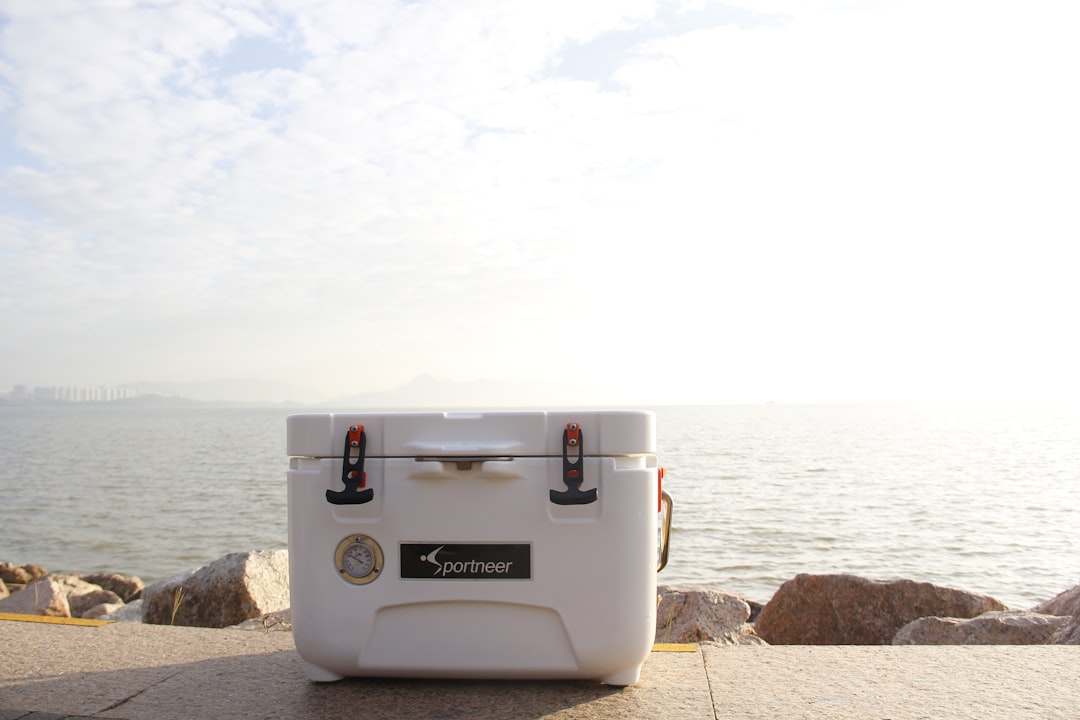
Use EPS foam for most standard cold shipments where box size isn’t tightly constrained — it’s inexpensive, widely available, and forgiving of rough handling. Use vacuum insulated panels when you need the thinnest, lightest possible box for a given thermal performance (long transit times, strict payload volume, or premium biologics/pharma shipments) and you can control handling well enough to avoid puncturing the panel’s outer film.
How Each Material Actually Insulates
EPS foam is a rigid, closed-cell foam molded from expanded polystyrene beads. It insulates through trapped air pockets within the cell structure, giving it a fairly consistent R-value of around 4 per inch of thickness. To hold a payload at temperature for 48-72 hours, an EPS shipper typically needs walls in the 1-2 inch range, which adds bulk and weight to the overall package.
A vacuum insulated panel works on a completely different principle. A rigid, highly porous core material (commonly fumed silica) is wrapped in a gas-tight barrier film, and the air is evacuated from inside before the panel is sealed. With virtually no air left to conduct or convect heat, an intact VIP panel can reach an R-value in the range of 35-40 per inch — roughly seven to eight times better than EPS foam of the same thickness. That’s why a VIP shipper can hold the same temperature for the same duration in a box with walls a fraction as thick as an EPS equivalent.
The catch is that VIP performance depends entirely on that vacuum staying intact. If the outer film is punctured or torn — even a small nick from a box cutter or a staple — the vacuum is lost and the panel’s R-value collapses back down toward EPS-level performance (roughly 4 per inch) almost immediately. EPS has no equivalent failure mode; a chip or crack in the foam degrades performance gradually, not catastrophically.
Cost, Weight, and Durability Tradeoffs
EPS foam wins on upfront cost and simplicity. It’s cheap to mold, easy to source from multiple suppliers, tolerant of drops and rough freight handling, and doesn’t require special training to pack or inspect. The downside is bulk: thicker walls mean a larger overall box (higher dimensional-weight shipping charges) and more material to dispose of. EPS is also difficult to recycle in most areas — it requires a foam densifier that most curbside programs don’t have — and a handful of states, including California and Oregon, have restricted certain EPS foam packaging, so check local rules if you ship into those markets.
VIP shippers cost noticeably more per unit, both because of the manufacturing process and the specialized core material, but they let you ship in a smaller, lighter box for the same hold time — which can offset some of that premium through lower dimensional-weight freight costs, especially on high-volume or long-distance lanes. VIPs are also typically designed as reusable, returnable systems in pharma and lab-supply cold chains, since the panels are too resource-intensive to treat as single-use. That reuse model only works if you have a return logistics program in place; without one, a damaged or lost VIP box is a bigger loss than a damaged EPS cooler.
Durability is the clearest dividing line. EPS tolerates careless handling; VIP does not. If your shipment goes through multiple handoffs, unpredictable couriers, or manual loading where a box cutter is likely to nick the outer wall, EPS is the safer bet unless you’re also using a rigid outer carton or corrugated shell to protect the VIP panel from punctures.
Tips / Common Mistakes
Don’t assume every VIP box on the market performs the same — panel thickness, core material, and how tightly the panels fit inside the outer shell all affect real-world hold time, so ask the supplier for actual temperature-profile test data rather than just an R-value spec sheet.
Always pair VIP panels with a rigid outer carton or a foam/corrugated buffer layer. The panels themselves are not built to be the outermost structural surface of a shipped package.
Inspect VIP shippers before every reuse cycle. A visibly stiff, rigid panel usually still holds vacuum; a panel that feels soft or floppy has lost its seal and needs to be retired even if the outer film looks undamaged.
For EPS, don’t cut corners on wall thickness to save on box size — undersized EPS walls are the most common reason a temperature-sensitive shipment fails in transit, especially on shipments that get delayed a day or land during hot or cold weather extremes.
If sustainability or state packaging restrictions are a concern, look at molded pulp/paper-based insulated coolers as a middle-ground alternative — they trade some thermal performance for recyclability, and several manufacturers now market them specifically as EPS replacements for cold chain shipping.
Explore more: more insulation and materials guides.
EPS Foam vs Vacuum Insulated Panels FAQs
Is a vacuum insulated panel always better than EPS foam?
Not always — it’s better on thermal performance per inch of thickness, but EPS is more forgiving of rough handling, cheaper, and doesn’t have a single point of failure. Long-duration, space-constrained, or premium shipments favor VIP; routine or rough-handling shipments often favor EPS.
What happens if a VIP panel gets punctured during shipping?
The vacuum seal is broken and the panel’s insulating value drops sharply, roughly down to the level of the core material without a vacuum (similar to basic foam performance). This is why VIP shippers need a protective outer shell and careful handling instructions.
Can EPS foam and VIP panels be combined in the same shipper?
Yes — many cold chain shippers use a rigid outer shell (sometimes EPS or corrugated) around an inner layer of VIP panels, combining VIP’s thermal efficiency with EPS’s impact protection and structural durability.
Are VIP shippers reusable, or single-use like most EPS coolers?
VIP shippers are generally designed to be reusable and are common in returnable cold chain logistics programs, since the panels are more resource-intensive to produce than EPS. EPS coolers can be reused too, but many shippers treat them as single-use due to their low cost.
Find the Right Packaging Supplier
Search the free Packaura supplier directory — filter by material, certification, and location to find vetted suppliers. Search the Supplier Directory.
Want packaging news in your inbox? Subscribe to the free newsletter.
Photo by Sandrene Zhang on Unsplash.