
Swapping plastic clamshells and shrink film for compostable bags, boxes, and wraps is one of the quickest ways a bakery can cut its footprint and back up its “sustainable” branding with something customers can see and feel. But packaging labeled “eco-friendly” doesn’t all behave the same way. The wrong material for the wrong product can mean soggy croissants, greasy bags, or packaging that ends up in a landfill instead of a compost pile.
This guide compares the four main materials bakeries use: kraft paper, PLA-lined film, glassine, and molded fiber. It explains what compostable certifications actually mean, which format suits bread, pastries, cookies, and cakes, and how to avoid the mistakes that catch most bakeries out when they switch.
Quick Answer
For most bakeries, the best mix is uncoated kraft paper bags for bread and rolls, glassine (or kraft with a PLA window) for pastries and cookies, and molded fiber or certified coated-paperboard boxes for cakes and larger items. If the packaging must be composted, look for BPI certification (ASTM D6400 for plastics, D6868 for paper or fiber with a compostable coating). Most PLA-lined items are industrial-compost-only and will not break down in a home compost bin.
The Main Compostable Materials, Compared
Uncoated kraft paper is the workhorse of bakery packaging. It’s inexpensive and widely available. It’s recyclable if kept clean and dry, and compostable in home and industrial systems because it has no plastic coating (check that inks and adhesives are also compostable). Its porous structure lets steam escape, which is what you want for bread and rolls. Fully sealing warm bread in plastic traps moisture, softens the crust, and encourages mold. The tradeoff is that plain kraft offers little grease or moisture barrier, so it’s a poor match for anything oily or wet unless it’s paired with a liner.
PLA (polylactic acid) is a plant-derived plastic, typically made from corn starch or sugarcane. It’s used for clear windows in bags and boxes, pastry clamshells, and cold-drink cups. It looks and performs like conventional clear plastic, which is great for showing off decorated cakes or laminated pastries. But it is industrially compostable only. It needs the sustained heat of a commercial composting facility, and it will not break down in a backyard pile or a landfill any faster than regular plastic. If your area lacks commercial composting access, a PLA window mostly adds recycling confusion, since PLA isn’t accepted in most curbside plastic recycling either.
Glassine is a smooth, semi-translucent, greaseproof paper made by super-calendering pulp under heat and pressure. Plain glassine has no wax or plastic coating, so it is recyclable in paper streams and compostable where local facilities accept paper, while still resisting grease and oil. That’s why it’s a longtime favorite for interleaving cookies, wrapping single pastries, and lining boxes. Be careful with siliconized or coated glassine, which often can’t be recycled or composted with paper. It costs more than plain kraft but generally less than plastic-lined alternatives, and it tolerates warm (not steaming-hot) items.
Molded fiber is usually made from bagasse (sugarcane pulp), bamboo, wheat straw, or recycled paper. It’s the go-to for rigid trays, clamshells, and cake bases. It’s sturdy enough to hold heavier baked goods and resists grease and moisture reasonably well without a plastic liner. Some products add a thin compostable coating for extra moisture resistance, so check that the certification covers the coating. Ask suppliers whether the product is PFAS-free, since fluorinated grease-proofing agents have historically been used in some fiber products. See our PFAS-free food packaging guide for details.
Which Packaging Fits Which Baked Good?
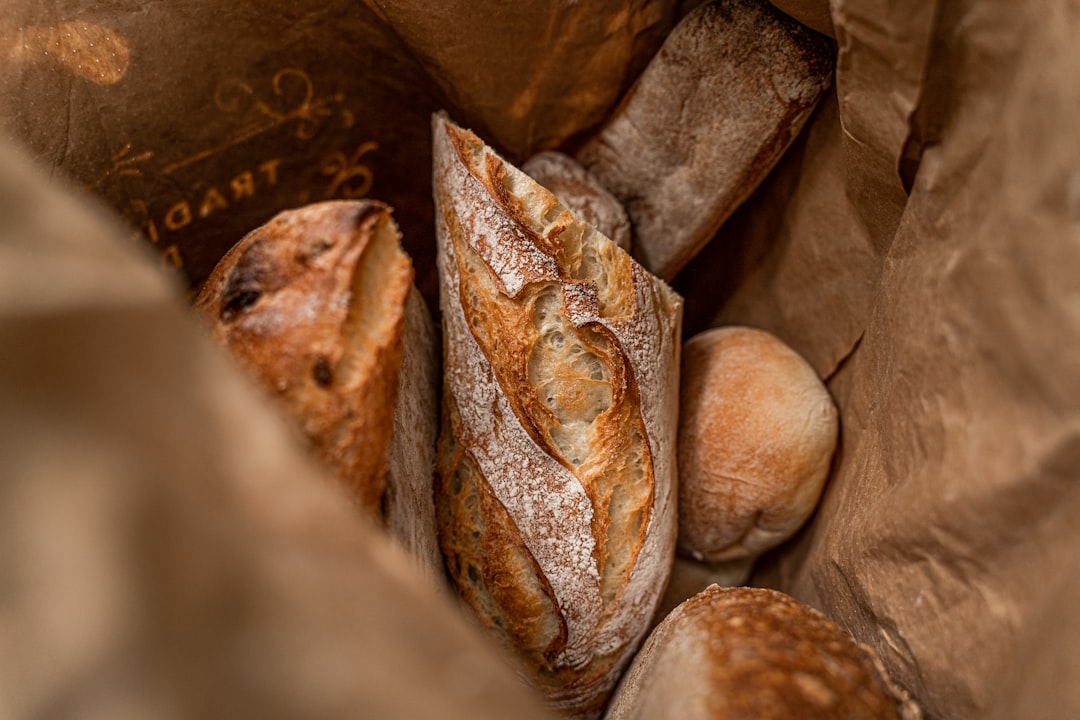
Bread and rolls: plain, wax-free kraft paper bags let steam escape and keep crusts crisp longer than plastic. Avoid fully sealed plastic bags for anything with a crust. Paper does dry bread out faster, so it suits bread that sells within a day or two. Soft sandwich loaves that must last longer may need a different plan.
Pastries and croissants: a glassine liner or bag keeps butter from soaking through while staying compostable. Pair it with a kraft bag or box for structure.
Cookies and bars: glassine sheets for interleaving, plus a kraft or molded-fiber box as the outer container.
Cakes and larger items: molded fiber boxes or trays, or coated paperboard boxes certified under ASTM D6868, give you the rigidity plastic clamshells used to offer. Keep in mind that D6868 covers paper with a compostable plastic coating or lining, so certified coated paperboard swaps conventional plastic for a compostable one rather than removing plastic altogether.
Take-out sandwiches and savory items: PLA-lined kraft bags or glassine give some grease resistance while remaining compostable, though the PLA-lined options generally need industrial composting to break down.
What Compostable Certifications Actually Mean
The Biodegradable Products Institute (BPI) is the main North American certifier. It uses ASTM D6400 as the base standard for every item it certifies. D6868 applies to paper or fiber products with a compostable plastic coating or lining. It also offers optional D8410 assessment for eligible cellulosic-fiber items. BPI also requires that certified products contain no intentionally added fluorinated chemicals.
These standards are written around industrial (commercial) composting, with sustained temperatures well above what a backyard bin reaches. A home-compostable claim needs separate testing. BPI launched a Home Compostability Certification Program in 2025, based on the French standard NF T 51-800, and commercial certification is a prerequisite for it. For more on how the testing works, see our ASTM D6400 certification guide.
The FTC’s Green Guides also apply to your supplier’s claims and to yours. A bare “compostable” claim implies the item breaks down in any composting setting. The Guides say marketers should qualify the claim if the item can’t be composted safely at home or if commercial facilities aren’t available to a substantial majority of consumers. Ask your supplier for the certificate, and word your own signage accurately, for example “commercially compostable where facilities exist.”
Tips and Common Mistakes
Don’t assume “compostable” means “home compostable.” Most PLA-based and plastic-coated compostable packaging is rated for industrial facilities only. If your city doesn’t offer commercial composting pickup, that packaging will most likely go in the trash whatever the label says. Plain kraft, plain glassine, and unlined molded fiber are safer bets where composting infrastructure is thin.
Check for real certification, not marketing language. Look for the BPI mark, references to ASTM D6400 or D6868, or the TÜV Austria “OK compost” marks for products sold internationally. A green leaf logo or the word “eco” isn’t a certification.
Don’t pack oily or warm items in unbarriered paper. Plain kraft wicks and holds grease, which can weaken and stain it. Use a glassine liner or a grease-resistant kraft for anything buttery.
Tell customers what to do with it. Print short disposal instructions (“compost where accepted” or “recycle clean paper”). Compostable packaging only helps if it reaches the right stream.
Test before switching your whole line. Order samples and run them through a real day of packing warm bread, iced pastries, and boxed cake. Check for grease bleed-through, crushed corners, and how the packaging looks after a car ride home.
Photos
sustainable bakery packaging FAQs
What is the most sustainable packaging for a bakery?
For most bakeries, plain kraft paper bags and boxes, plain glassine, and unlined molded fiber are the most sustainable options. They have no plastic coating, work in more disposal systems, and don’t depend on industrial composting. Choose based on the product and on what your local waste system accepts.
Is compostable bakery packaging really compostable at home?
Usually not. Most PLA-lined or plastic-coated items are certified for industrial composting only. Uncoated kraft paper, plain glassine, and unlined molded fiber are the most likely to break down in a home bin. A product should only be called home compostable if it has separate home-compostability certification.
What is the difference between ASTM D6400 and D6868?
ASTM D6400 covers compostable plastics and plastic-based items such as PLA cups and bags. ASTM D6868 covers paper or fiber products with a compostable plastic coating or lining. Both are tested for industrial composting conditions, and BPI certifies to them.
Is glassine paper compostable and recyclable?
Plain, uncoated glassine has no wax or plastic coating. It is generally recyclable with paper and compostable where facilities accept paper. Coated or siliconized glassine often can’t be recycled or composted with paper, so check the spec and your local rules.
What bag is best for fresh bread?
A plain, wax-free kraft paper bag. It lets steam escape so the crust stays crisp, and it avoids the trapped moisture that speeds up mold in sealed plastic. Paper dries bread out faster, so it is best for bread sold within a day or two.
Are PLA windows on bakery bags a good idea?
Only if commercial composting is available to your customers. PLA won’t break down in a backyard pile or landfill, and most curbside recycling doesn’t accept it. If it isn’t, a window mostly adds cost and confusion, and a plain kraft or glassine bag is usually the better choice.
Can molded fiber cake boxes contain PFAS?
Some fiber packaging has used fluorinated grease-proofing agents, and a number of U.S. states now restrict intentionally added PFAS in food packaging. Ask suppliers for PFAS-free documentation. BPI certification requires no intentionally added fluorinated chemicals.
Find the Right Packaging Supplier
Search the free Packaura supplier directory — filter by material, certification, and location to find vetted suppliers. Search the Supplier Directory.
Want packaging news in your inbox? Subscribe to the free newsletter.