
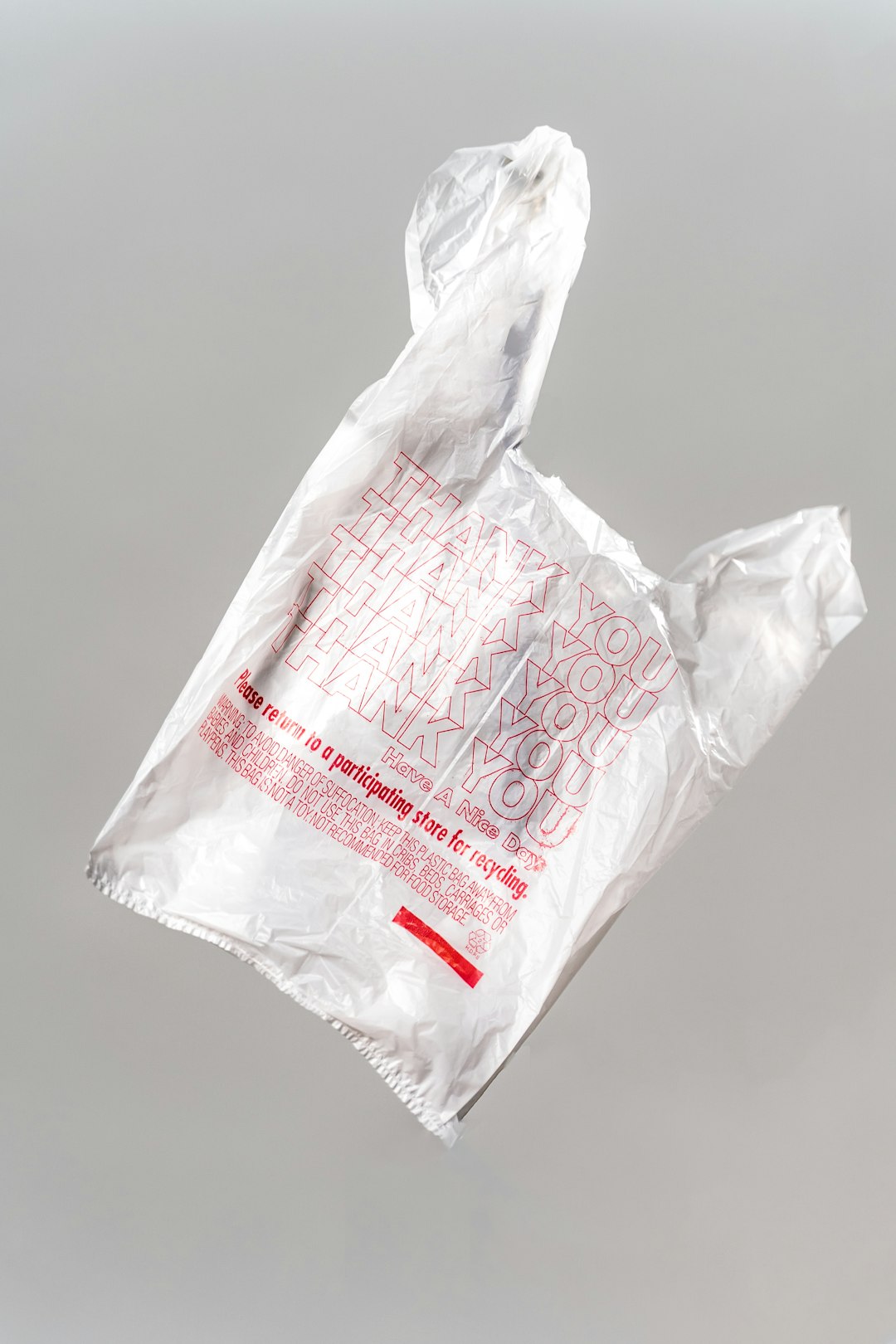
If you ship or package products in thin plastic bags, you’ve probably seen the familiar warning: “Keep this bag away from babies and children.” What’s less obvious is that this isn’t just a courtesy line — in several states it’s a legal requirement with specific rules about bag size, thickness, wording, and print size.
This guide breaks down which states actually regulate poly bag suffocation warnings, what triggers the requirement, what the label needs to say, and the mistakes that get brands in trouble even when they think they’re covered.
Quick Answer
Five states — California, New York, Massachusetts, Rhode Island, and Virginia — have laws requiring suffocation warning labels on certain thin plastic bags, along with local ordinances in cities like New York City and Chicago. The requirement generally kicks in for bags made of film about 1 mil (0.001 inch) or thinner, with a combined length-plus-width around 25 inches or more and an opening wide enough for a child’s head (roughly 5 to 7 inches in diameter). If your poly bags fall outside those thresholds, state law may not require a warning — but most retailers and marketplaces require one anyway.
Which States Regulate Poly Bag Warnings, and When They Apply
The core group of states with dedicated suffocation-warning statutes is California, New York, Massachusetts, Rhode Island, and Virginia. Each law is triggered by a combination of bag thickness and bag size rather than applying to every plastic bag on the market. The common thread across these states is a film thickness threshold around 1 mil or less — thicker, sturdier bags (like many poly mailers used for shipping) often fall outside the statute entirely, which is why some packaging suppliers intentionally spec bags above 1 mil.
On top of thickness, most of these states also look at bag dimensions: a combined length-plus-width around 25 inches, paired with an opening large enough to fit over a child’s head (commonly cited as roughly a 5- to 7-inch diameter). Massachusetts is generally considered the strictest of the group, extending its requirement to a broad range of retail and household bags and requiring the warning to repeat at intervals on larger bags. Virginia’s law is narrower and has historically focused on bags used for freshly cleaned garments, like dry-cleaning bags. New York and New York City have overlapping requirements, so bags sold or distributed in NYC may need to satisfy both the state and city rules. Chicago has its own municipal ordinance layered on top of Illinois, which has no statewide law of its own.
Outside these five states and their cities, there’s no federal law mandating suffocation warnings on plastic bags. But that doesn’t mean you’re in the clear — the Consumer Product Safety Commission has flagged thin plastic bags as a suffocation hazard for decades, and product liability exposure exists nationwide even without a specific statute.
What the Label Actually Needs to Say and Look Like
The widely used, generally accepted wording is: “WARNING: To avoid danger of suffocation, keep this plastic bag away from babies and children. Do not use this bag in cribs, beds, carriages, or playpens. This bag is not a toy.” New York and Massachusetts have historically been the strictest about wording, sometimes requiring pre-approval for alternate language, while California and Rhode Island allow different phrasing as long as it clearly communicates the suffocation hazard.
Print size isn’t one-size-fits-all — these laws generally scale the minimum type size to the size of the bag, so a small poly bag needs a much smaller warning than a large garment or dry-cleaning bag. Virginia has the largest flat minimum of the group, requiring legible type of at least 36-point on its dry-cleaning bag warnings (it does not require boldface). Rhode Island, by contrast, requires the warning to be printed in boldface type but doesn’t set as high a minimum point size. California, New York, and Massachusetts instead scale type size to bag dimensions, with minimums that climb as bags get larger. Some states also specify how the warning must be applied (printed directly on the bag vs. an attached label) and require it on both sides of the bag or repeated at regular intervals for oversized bags.
Even if your bags technically fall below a state’s size or thickness trigger, check your retailer and marketplace requirements separately. Major marketplaces and big-box retailers commonly require a suffocation warning on any poly bag above a certain opening size — often around 5 inches — regardless of what state law says, and they’ll reject inbound shipments that don’t comply.

Tips and Common Mistakes
The most common mistake is assuming a single warning label design works everywhere. If you distribute nationally, design your default poly bag warning to meet the strictest applicable state (typically Massachusetts or New York for general bags, or Virginia if you’re dealing with dry-cleaning-style poly) rather than trying to maintain separate SKUs per state.
Don’t rely on bag thickness alone to exempt you — verify your actual film gauge with your supplier’s spec sheet, because ‘roughly 1 mil’ bags can vary by manufacturing run, and a thinner-than-expected batch could push you back into scope.
Check both the state and any city ordinance where you do business — a bag that satisfies New York State’s law doesn’t automatically satisfy New York City’s separate rule, and the reverse is also true.
If you sell through Amazon, Walmart, or another marketplace, treat their poly bag policies as a separate compliance layer from state law — marketplace programs (like Amazon’s FBA prep requirements) often apply their own thickness and warning rules independent of where you ship from or to.
If you export packaging to Canada, remember Quebec requires the warning in French, and many EU countries require multi-language warnings — don’t assume a US-compliant bag is compliant abroad.
Explore more: more packaging compliance guides.
Poly bag suffocation warning labels FAQs
Do all states require suffocation warnings on plastic bags?
No. Only a handful of states — California, New York, Massachusetts, Rhode Island, and Virginia — have dedicated statutes, plus city ordinances in places like New York City and Chicago. There’s no federal law requiring the warning nationwide, though retailers and marketplaces often require it regardless of state law.
What thickness of poly bag needs a suffocation warning?
State laws generally apply to film that’s around 1 mil (0.001 inch) thick or thinner. Thicker poly bags, such as many shipping mailers, often fall outside the statutory requirement, though marketplace and retailer policies may still require a warning.
What exact wording does the label need?
There’s no single nationwide-mandated sentence, but the widely used template is: ‘WARNING: To avoid danger of suffocation, keep this plastic bag away from babies and children. Do not use this bag in cribs, beds, carriages, or playpens. This bag is not a toy.’ Some states allow alternate wording as long as it clearly conveys the hazard; others expect pre-approved language.
Does bag size affect the warning label rules?
Yes. Most state statutes only apply once a bag reaches a certain combined length-plus-width (commonly around 25 inches) and has an opening large enough to fit over a child’s head (roughly 5 to 7 inches). Larger bags also typically require larger warning type, and Virginia sets a flat 36-point minimum for legible type on its dry-cleaning bag warnings (no boldface requirement).
Is a suffocation warning required even if my state doesn’t have a law?
Often yes in practice, even without a state statute. Major marketplaces and retailers commonly require suffocation warnings on poly bags above a certain opening size as a condition of doing business, and product liability risk exists nationwide regardless of specific legislation.
Find the Right Packaging Supplier
Search the free Packaura supplier directory — filter by material, certification, and location to find vetted suppliers. Search the Supplier Directory.
Want packaging news in your inbox? Subscribe to the free newsletter.
Photo by Christopher Vega on Unsplash.