
Extended producer responsibility (EPR) rules for packaging are now live or phasing in across the UK, the EU, and a growing list of US states, and packaging teams are suddenly shopping for help with registration, data, and fee reporting. Three names keep coming up in that search: Anthesis, Reath, and Sphera. They get lumped together as “EPR software,” but they aren’t built the same way, and picking the wrong one means paying for a service model that doesn’t match how your team actually wants to work.
This guide breaks down what each one actually is, what it covers, and how to match a platform (or a consultancy) to your situation, whether that’s outsourcing EPR reporting entirely, running multi-country fee payments through one system, or building a reusable packaging program with the data to prove it works.

Quick Answer
There’s no single “best” pick here because the three solve overlapping but different problems. Sphera’s EC4P platform is the closest fit if you want software plus managed service handling multi-country EPR registration, data, reporting, and green-fee payments for packaging, WEEE, and batteries together. Anthesis fits teams who’d rather hand EPR fee modelling and reporting to a sustainability consultancy than run a tool in-house. Reath fits brands that need to unify EPR and Plastic Packaging Tax compliance data with physical tracking of reusable packaging, useful if reuse and eco-modulation are part of your compliance strategy.
What Each Platform Actually Does
Anthesis Group is a global sustainability consultancy, not a self-serve software vendor. Its EPR team runs supplier data collection, models EPR fees (packaging baseline multiplied by each scheme’s fee rates), and manages reporting across markets including the UK, EU, and North America for multinational clients. Choosing Anthesis means buying expertise and a managed process; your team isn’t logging into a dashboard to self-file, you’re outsourcing the work to specialists who track changing rules on your behalf.
Sphera runs its EPR offering through EC4P (operated by Sphera Compliance Ltd, formerly Thinkstep Compliance Ltd). It pairs a cloud-based compliance platform with managed compliance support covering WEEE, battery, and packaging EPR obligations across EU and EFTA states and beyond. It centralizes packaging data, automates obligation calculations and reporting, and can handle the actual green-fee recycling payments to national schemes on your behalf. Of the three, it’s the most purpose-built for running EPR obligations across many countries from one system.
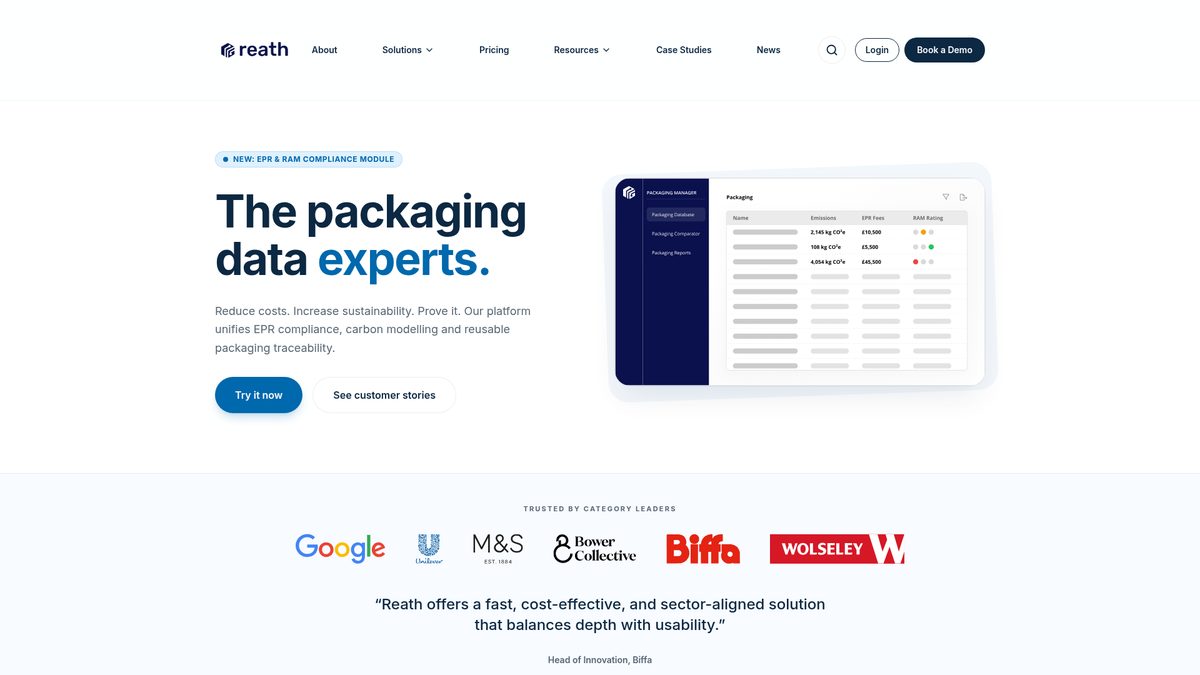
Reath (Reath Technology Ltd, founded 2019 in Edinburgh) positions itself as a packaging-data platform that unifies EPR and Plastic Packaging Tax compliance with carbon/environmental impact modelling and physical tracking of reusable packaging, using its own QR-based reuse.id data standard. It’s a strong fit if reuse formats (refillable bottles, reusable containers) are part of how you’re managing packaging obligations and you need real tracking data, not just spreadsheets, to back up those compliance claims.
How to Choose
If your packaging footprint spans several countries and you want one system handling registration, data, reporting, and fee payments without building an internal compliance team, start with Sphera’s EC4P. If you’d rather hand the entire EPR process to outside experts and your budget supports consultancy-level service, Anthesis is built for exactly that relationship. If your priority includes scaling reusable packaging formats and you need tracking data to support eco-modulation or tax claims alongside EPR reporting, Reath covers ground the other two don’t.
These aren’t always either-or choices. Some brands use a reuse-focused platform like Reath to design and track a reusable program, then rely on a broader compliance platform or consultancy for the multi-country filing and fee payment side. Ask each vendor directly which jurisdictions they cover for your specific packaging categories before signing anything; EPR rules differ meaningfully between the UK, individual EU member states, and the handful of US states with EPR laws now in force.
Tips / Common Mistakes
Don’t assume any vendor removes the need for accurate packaging data from your own operations; all three still depend on correct material types, weights, and volumes from you or your suppliers. Don’t wait until a filing deadline to start evaluating a vendor: data collection, supplier surveys, and onboarding typically take months. Confirm explicitly whether a platform files and pays your fees on your behalf or only supplies data and tracking that supports a filing you still have to make elsewhere; that distinction matters more than any feature list. Finally, check country and material coverage against your actual packaging portfolio rather than assuming a vendor handles every jurisdiction you sell into.
Explore more: more packaging compliance guides.
EPR compliance software FAQs
Is Anthesis a software product or a consultancy?
Anthesis is a sustainability consultancy. It uses internal compliance and fee-modelling systems to run EPR reporting for clients, but it isn’t primarily selling a self-serve software dashboard.
Does Sphera’s EPR platform only cover packaging?
No. Sphera’s EC4P service covers WEEE, battery, and packaging EPR obligations together, run through Sphera Compliance Ltd, including green-fee recycling payments across EU and EFTA states and beyond.
Is Reath an EPR compliance tool?
Yes, alongside its reuse tracking features. Reath’s platform is built to unify EPR and Plastic Packaging Tax compliance data with carbon modelling and physical tracking of reusable packaging via its reuse.id standard.
Find the Right Packaging Supplier
Search the free Packaura supplier directory — filter by material, certification, and location to find vetted suppliers. Search the Supplier Directory.
Want packaging news in your inbox? Subscribe to the free newsletter.
Images: Sphera.