
If your packaging carries a chasing-arrows symbol or the word ‘recyclable’ and you sell into California, SB 343 changes what you’re allowed to say — and the rules just got more complicated after a federal court stepped in. This guide walks through what the law actually requires, the audit steps to get compliant, and where things stand after the July 2026 court injunction paused enforcement.
You’ll get the plain-language version of the ’60/60′ recyclability test, a practical checklist for auditing your labels, what the penalties look like, and how to think about compliance timing while litigation over the law is still unresolved.
Quick Answer
SB 343 (California’s ‘Truth in Recycling’ law) bars the chasing-arrows symbol or any recyclability claim on packaging or products sold in California unless the material passes a ’60/60′ test: it must be collected by recycling programs covering at least 60% of the state’s population and sorted into recyclable streams by facilities serving at least 60% of those programs, with plastics also meeting design-for-recycling and chemical-restriction rules. The restrictions were set to apply to items manufactured on or after October 4, 2026, but a federal court granted a preliminary injunction on July 14, 2026, pausing enforcement while a First Amendment challenge plays out — so the safest move is to keep auditing and preparing labels as if the deadline still stands.
Sourcing compliant packaging? Search the free Packaura Supplier Directory — filter by material, certification, and location to find vetted suppliers that meet these requirements.
The ’60/60′ Test: What Actually Qualifies as Recyclable
SB 343 (authored by state Senator Ben Allen, chaptered in 2021) ties recyclability claims to what actually happens on the ground in California, not what’s theoretically possible. To legally use the chasing-arrows symbol, or wording that directs consumers to recycle, a product or package has to meet all of these: it’s collected by curbside or drop-off programs serving at least 60% of California’s population; it’s sorted into a defined recyclable material stream by facilities serving at least 60% of those collection programs; and the recovered material is regularly used as feedstock to make new products, consistent with international (Basel Convention) rules on where recovered material can be shipped.
Plastic packaging faces an extra layer: it also has to meet design-for-recycling standards modeled on the Association of Plastic Recyclers’ (APR) Design® Guide, and it can’t contain heavy metals (lead, mercury, cadmium, hexavalent chromium) at or above 100 parts per million, or intentionally added PFAS (or PFAS measured as total organic fluorine) at or above 100 ppm, or components, inks, adhesives, or labels that interfere with recycling. Food-service packaging carries an additional, separate restriction: it can’t contain an intentionally added chemical identified in FDA and California Office of Environmental Health Hazard Assessment (OEHHA) regulations, regardless of concentration — that restriction isn’t governed by the 100 ppm threshold.
CalRecycle determines which materials clear this bar through a statewide Material Characterization Study. It published the first Final Findings Report on April 4, 2025 (based on 2023–2024 data collected at materials recovery facilities), which started an 18-month clock — landing the original compliance deadline on October 4, 2026. CalRecycle is required to update this study in 2027 and every five years after, and each update resets an 18-month compliance window.
How to Audit and Fix Your Labels
Start by inventorying every SKU sold or shipped into California that carries a recycling symbol, a ‘recyclable’ claim, or language telling shoppers to recycle it — including packaging components like caps, films, and inserts, not just the primary container.
For each item, check whether the material and format actually clears the 60/60 collection-and-sorting bar. CalRecycle’s published study data and APR’s resources are the reference points regulators will use, so check your claims against those rather than general assumptions about what’s ‘technically recyclable.’
For plastics, run the package design against the APR Design Guide criteria, confirm heavy metals and PFAS stay under their respective 100 ppm thresholds, confirm no FDA/OEHHA-flagged chemical has been intentionally added (for food-service packaging), and confirm no labels, inks, or adhesives are known to disrupt recycling streams.
Anything that doesn’t pass needs the symbol or recyclability claim removed, or replaced with compliant alternatives (for example, directing consumers to check local program availability rather than asserting recyclability outright).
Because the restriction applies based on manufacture date rather than sale date, packaging manufactured before the compliance date is exempt even if it’s sold later — so timing your inventory and print runs around that date matters for cost control.
Keep records showing the basis for any recyclability claim you keep. Documentation is your primary defense if the California Attorney General or a local jurisdiction challenges a label.
Tips / Common Mistakes
Don’t assume a material is fine just because it’s recyclable somewhere in the country — SB 343 is keyed specifically to California collection and processing rates, not national averages or your own municipal program.
Don’t treat the July 2026 injunction as a green light to stop preparing. It’s a preliminary ruling in an ongoing case, not a final decision, and the underlying compliance deadline and CalRecycle framework remain on the books. Brands that pause entirely risk a scramble if the injunction is narrowed or overturned on appeal.
Don’t overlook the plastics-specific chemical rules — a package can pass the general 60/60 collection test and still fail because of heavy metals or PFAS above the 100 ppm thresholds, an FDA/OEHHA-flagged chemical, or incompatible labels and adhesives that block recycling.
Don’t forget the overlap with SB 54 (California’s separate Extended Producer Responsibility law), which references SB 343’s recyclability framework — the injunction has ripple effects there too, so track both.
Don’t rely on a single national label design without checking it against California’s stricter standard; many brands end up needing a California-specific label variant or a more conservative claim used everywhere.
Explore more: See more Compliance guides.
California SB 343 FAQs
Does SB 343 apply to companies based outside California?
Yes. The law applies to any product or packaging manufactured, sold, or offered for sale in California, regardless of where the company is headquartered, and does not carve out an exemption based on company size.
Is SB 343 currently being enforced?
No. On July 14, 2026, a federal court granted a preliminary injunction blocking enforcement after an industry coalition argued the law unconstitutionally restricts commercial speech. This is a preliminary ruling, not a final one, so the case is still ongoing.
What are the penalties for violating SB 343?
Under Public Resources Code section 42358, civil penalties run $500 for a first violation, $1,000 for a second, and $2,000 for a third and each subsequent violation, with the California Attorney General and local jurisdictions able to enforce. Violations can also be pursued under California’s general false advertising statute, and each mislabeled product or package can potentially count as a separate violation.
Source Smarter With Packaura Direct
Find packaging suppliers, surplus inventory, and certification — all on Packaura Direct. Try Packaura Direct.
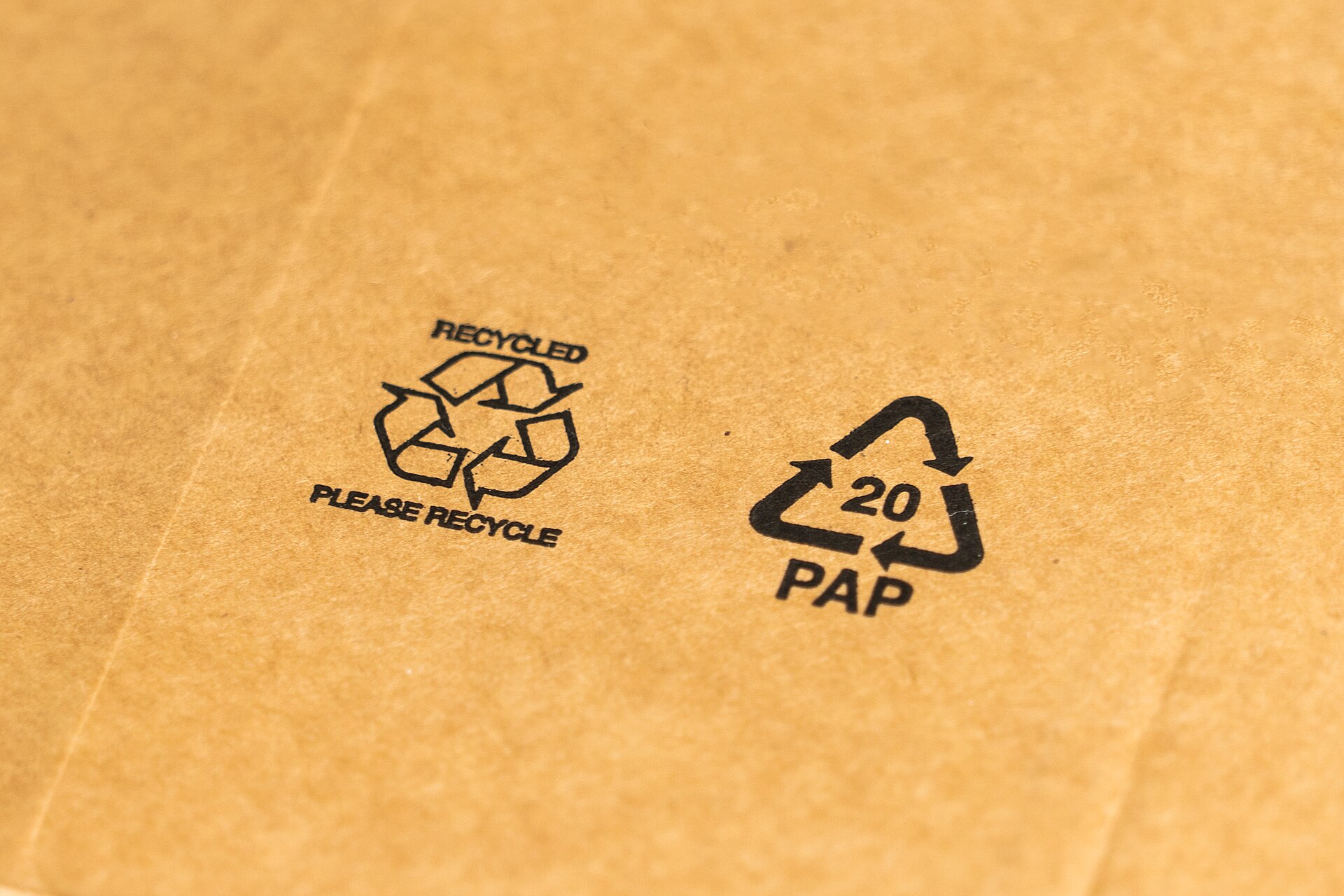
Photo: Meanwell Packaging / CC BY 2.0, via Wikimedia Commons.