If you make or sell food packaging, you’ve probably run into both of these names while researching compliance tools — and quickly realized they’re not actually solving the same problem. One tracks what’s in your materials; the other tracks what happens on your plant floor.
This guide breaks down what Toxnot (now rebranded as 3E Exchange) and SafetyChain each do, where they overlap, and how to decide which one — or whether you need both — fits a food packaging or food manufacturing team.

Quick Answer
Toxnot, now sold under the name 3E Exchange by parent company 3E, is a supply chain data and chemical compliance platform — it collects supplier declarations, Safety Data Sheets, and material data to manage regulations like REACH, RoHS, Prop 65, and PFAS restrictions. SafetyChain is a food safety and quality management platform built for the plant floor, covering HACCP monitoring, GFSI audit readiness, supplier approval, and production checks. If your core question is ‘what chemicals and materials are in this packaging and are they compliant,’ look at 3E Exchange. If it’s ‘is our plant following food safety procedures and ready for an audit,’ look at SafetyChain.
What Each Platform Actually Does
3E Exchange (Toxnot) centers on supplier data collection and chemical/material compliance. Companies use it to send surveys to suppliers, collect and validate Safety Data Sheets and material declarations, and track compliance against a long list of regulatory frameworks — REACH, RoHS, TSCA, California Prop 65, SCIP, conflict minerals, and PFAS rules among them. For food packaging specifically, that means tracking food-contact substances and material composition data across a supply chain, and getting notified when a regulation affecting your products changes. It’s built for product compliance, EHS, and sustainability teams who need a defensible paper trail on what’s in their materials.
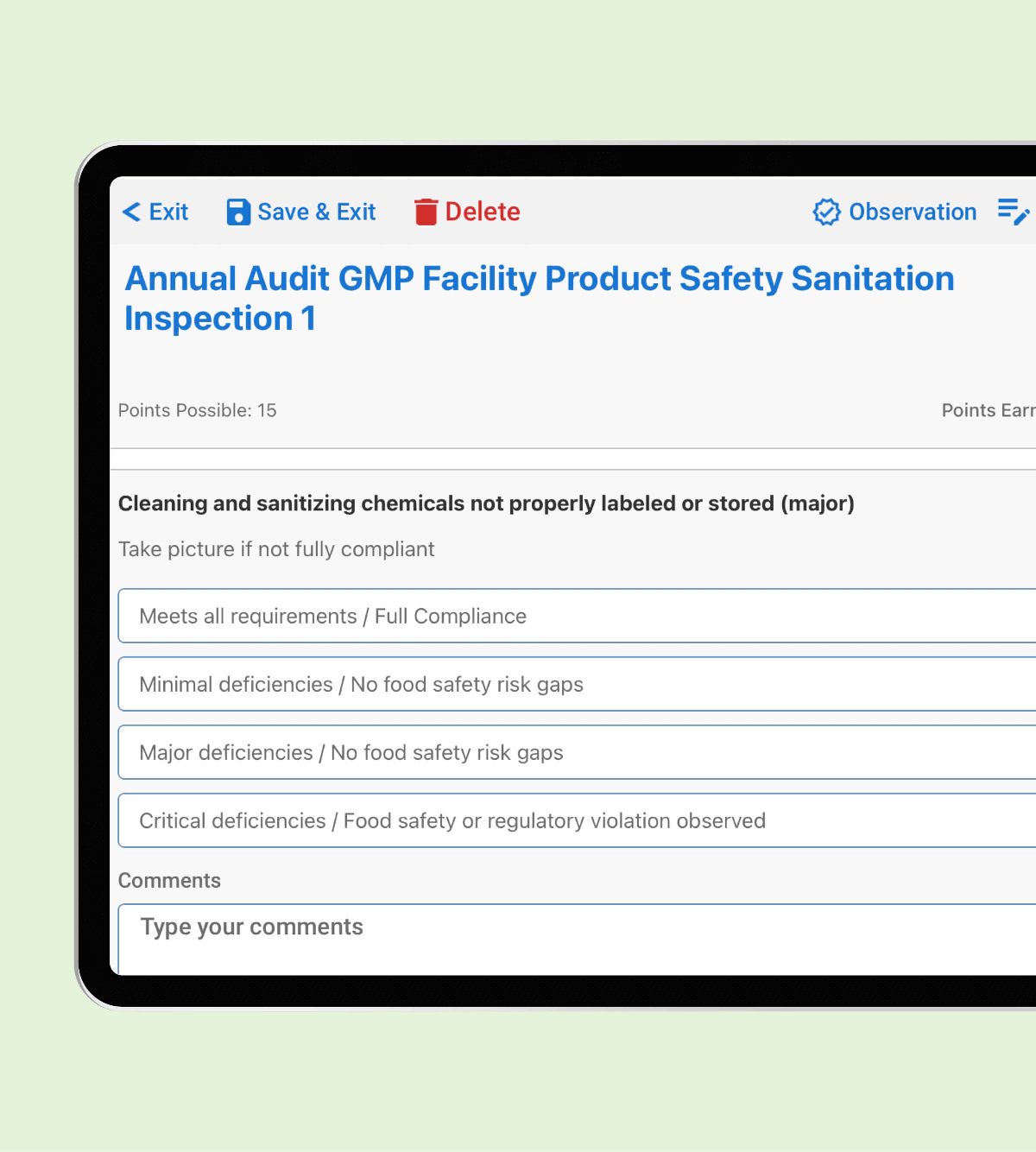
SafetyChain is a digital plant management and quality platform built specifically for food and beverage manufacturers. Its modules cover food safety programs (digital inspection forms, SOP access, corrective action workflows), regulatory and customer compliance tracking, in-process quality checks, production monitoring, and supplier compliance management. It’s designed to replace paper logs and spreadsheets on the plant floor and keep a facility audit-ready for FSMA, SQF, BRC, and HACCP requirements. SafetyChain’s own marketing doesn’t call out food-contact material compliance specifically — its strength is day-to-day food safety and quality operations, not chemical/material disclosure management.
How to Decide Which One Fits Your Team
Start with what you’re actually trying to prove. If an auditor, retailer, or regulator is asking ‘what’s in your packaging and is it compliant with REACH, RoHS, or Prop 65,’ that’s a material-compliance question — 3E Exchange’s supplier survey and SDS collection workflow is built for exactly that. If the question is ‘show me your HACCP records, your last GMP audit, or your corrective action log,’ that’s a plant operations question — SafetyChain’s inspection forms and audit-readiness tools are the better fit.
Consider who will actually use the tool day to day. 3E Exchange tends to sit with compliance, EHS, or sustainability staff who manage supplier relationships and regulatory tracking from an office or remote setting. SafetyChain is built for plant floor use — QA techs and line supervisors filling out digital forms on tablets during production, not just back-office compliance review.
Also weigh scale and pricing structure. Toxnot/3E Exchange has historically offered a free tier plus paid Professional and Team plans, scaling to custom Enterprise pricing — reasonable for smaller packaging brands to start light and grow. SafetyChain uses custom, typically facility-based pricing with plans like Essential, Advanced, and Supplier, which generally suits manufacturers with one or more physical plants rather than a brand with no manufacturing footprint of its own. A packaging brand that outsources production but needs to manage material compliance across suppliers will usually lean toward 3E Exchange; a co-packer or in-house manufacturer managing its own plant will lean toward SafetyChain.
Many food packaging companies that both design materials and operate production facilities end up needing both: one tool to manage what’s in the materials and from which suppliers, and a separate one to manage what happens on the line. Treat them as complementary rather than competing if that’s your situation.
Tips / Common Mistakes
Don’t search for ‘Toxnot’ expecting to land on a product called that anymore — the company was acquired by 3E and the product has been rebranded 3E Exchange, so pricing pages, demos, and support will reference the new name even though the underlying platform and purpose are the same.
Don’t assume either platform covers the other’s job. Buying SafetyChain won’t give you supplier material-declaration tracking for REACH or Prop 65, and buying 3E Exchange won’t give you plant-floor HACCP monitoring or audit checklists. Map your actual compliance obligations to the right category of tool before you request a demo.
Get pricing in writing before committing. Both vendors use custom or tiered quotes rather than fully public pricing, and SafetyChain in particular prices per facility — get a specific quote for your number of plants and suppliers rather than estimating from general pricing ranges you find online.
Ask each vendor directly about food-contact material support. Neither company’s public marketing leads with food-contact substance compliance by name, so during a demo, explicitly ask how the platform handles food-contact material declarations or food safety documentation for your specific packaging types before assuming it’s covered.
Explore more: More food packaging compliance guides.
Toxnot vs. SafetyChain FAQs
Is Toxnot still called Toxnot?
No. Toxnot was acquired by 3E and the product is now marketed as 3E Exchange, though some older listings and search results still reference the Toxnot name.
Can SafetyChain track chemical or material compliance like REACH or Prop 65?
SafetyChain is built around food safety and quality management on the plant floor — HACCP, GFSI audits, and production monitoring — not chemical or material regulatory tracking. For REACH, RoHS, or Prop 65 compliance on packaging materials, a supply chain compliance platform like 3E Exchange is the better fit.
Do food packaging companies need both platforms?
It depends on your operations. If you design or specify packaging materials and also run your own manufacturing or co-packing facility, you may need a material-compliance tool for suppliers and a separate food safety/QMS tool for the plant floor, since the two platforms solve different problems.
Find the Right Packaging Supplier
Search the free Packaura supplier directory — filter by material, certification, and location to find vetted suppliers. Search the Supplier Directory.
Want packaging news in your inbox? Subscribe to the free newsletter.
Images: 3E.