
Packaging industry news this week was mostly Q3 earnings, and the theme was cost pressure. Diesel, energy and freight bills ate into results at the big paper and glass producers. On the policy side, California’s EPR program faced a new constitutional challenge, and the U.S. reshuffled which Canadian packaging products face tariffs. Here are the packaging industry news stories that mattered for the week ending November 1, 2026.
Materials & Sustainability
CNG makes the case for food-grade PCR film
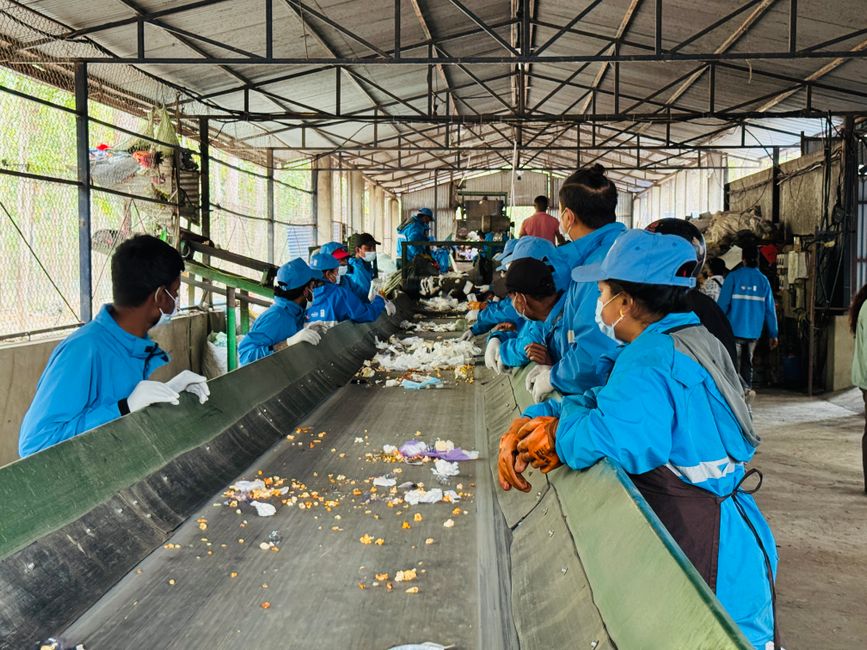
Charter Next Generation’s 2025 sustainability report says the company used 30% more postconsumer recycled (PCR) content in its films than in 2024. It also cut scope 1 and 2 emissions by 23%. CNG still calls food-grade PCR “one of the most challenging applications.” In a study with industry partners, 100% of high-density and 90% of low-density PCR samples met regulatory thresholds for chemicals of concern, according to Packaging Dive. Next, CNG will test finished packages with Printpack. If you’re weighing recycled content against FDA rules, our guide to FDA vs EU food contact rules covers the compliance side.
Estée Lauder: 67% of packaging now designed to be recyclable
Estée Lauder released its Fiscal 2026 Social Impact & Sustainability Report on October 28. The company says 67% of its packaging is designed to be recyclable and 21% of its packaging material is PCR. It also reports that 94% of the forest-based fiber in its paper packaging is responsibly sourced. The report covers July 2025 through June 2026 and tracks progress toward the company’s 2030 goals.
Wyda swaps a label for a pouch on aluminum trays
Wyda Packaging USA, a Brazilian aluminum tray maker, replaced the label on its private-label trays with a polyethylene pouch that holds the folded lids. The company calls it a “one-to-one component swap”: the part count stays the same, and workers no longer have to slot lids between stacked trays by hand. Wyda, based in Charlotte, says tariffs have made U.S. production more attractive and plans to double capacity there within two years.
JLT Recycling plans a $30M MRF timed to Maryland’s EPR rollout
DC-area hauler JLT Recycling plans to build a $30 million materials recovery facility for commercial single-stream recyclables in Upper Marlboro, Maryland. The timeline lines up with Maryland’s packaging EPR program. The state’s needs assessment estimated EPR could lift the recycling rate for paper and packaging from 34% to 50%. Better local sorting is also what fiber-based formats need, as we noted in our look at how long compostable packaging actually takes to break down.
Industry & Supply Chain
Smurfit Westrock braces for a $700M cost-inflation hit
Smurfit Westrock now expects energy and freight inflation to cost it about $700 million in 2026. CEO Tony Smurfit called the increases “unprecedented.” Diesel alone will add an estimated $120-130 million in North America. Q3 net sales rose 2% to $8.2 billion and net income fell to $219 million. Paper bag sales surged, and the company says it is “sold out” across grades. Its $100/ton containerboard increase from July had been recognized at only $70/ton by September.
O-I Glass cuts guidance again
O-I Glass swung to a $13 million Q3 net loss on $1.62 billion in sales, and shipments fell 2%. The company lowered its 2026 adjusted EBITDA outlook to $925-950 million, down from the $1.25-1.3 billion it guided at the start of the year. In Europe, energy and freight costs came in $15 million over plan, and U.S.-Canada trade friction will cost about $10 million this year. Its “Fit to Win” program has delivered $135 million in savings year to date.
Q3 earnings season: pricing is the main lever
The Q3 reports had a lot in common. According to Packaging Dive’s earnings roundup, International Paper took a $55 million hit from energy, fuel and recovered-fiber costs ahead of its DS Smith separation. PCA called pricing its “supreme focus.” Sonoco’s consumer packaging decline offset its industrial gains, and the company plans to close two European sites. Crown said beverage can volumes grew 6% and that it plans to reprice in 2027.
Clearwater weighs options after failures at former Graphic Packaging mill
Clearwater Paper bought its Augusta, Georgia, bleached paperboard mill from Graphic Packaging in 2024. The mill had electrical and mechanical failures in late September and early October, and it had already been running 10-15% below target for several quarters. CEO Arsen Kitch said some of the seller’s representations and warranties were “either incomplete or inaccurate.” Clearwater is reviewing all options, including recourse against Graphic Packaging.
Trump reshuffles Canadian packaging tariffs
Changes to the Section 338 list of Canadian goods facing 50% tariffs took effect October 30. Corrugated cartons and boxes, plastic bags and cases, and molded pulp articles came off the list. Kraft papers, self-adhesive labels and pressure-sensitive paper went on. Converters that buy across the border should check their product classifications; our guide to HS codes for packaging explains how boxes, bags and labels are classified.
International Paper leads $36M round for AI smart radios
International Paper led a $36 million funding round for Relay, a Raleigh startup that makes smart radios with AI transcription and translation. More than 20 IP sites are piloting or scaling the devices, and IP plans to reach 40-60 sites within two years. The Tampa pilot alone handles more than 4,000 transmissions a day.
Regulations & Design
California restaurants sue over SB 54 fees
The California Restaurant Association filed suit to stop SB 54. It argues that the EPR fees are taxes and that California law doesn’t let a private group like Circular Action Alliance impose them. Policy Pickup says this is the first EPR lawsuit to use that constitutional theory. The suit lands while CalRecycle has 75 days to review CAA’s revised program plan, which was submitted October 13. That plan cuts the 2027 cost estimate to $1.11 billion, down from $1.87 billion.
Colorado EPR board hears updates on two legal challenges
On October 28, Colorado’s packaging EPR advisory board reviewed amendments to the program plan and heard updates on two active lawsuits. The state has moved to dismiss two of the five claims brought by the National Association of Wholesaler-Distributors. Separately, Circular Action Alliance added 13 recycling facilities to the Colorado program, which brings annual processing capacity to more than 200,000 tons.
New Jersey bill would require 50% plastic source reduction
New Jersey’s SB 4656, from State Sen. Bob Smith, would require plastic packaging producers to cut plastic packaging 50% within 10 years of registering, with interim targets every two years. Unlike California’s collective approach, each company would have to comply on its own. Penalties could reach $50,000 per violation, according to the Sustainable Packaging Coalition’s policy roundup.
Rhode Island needs assessment: the problem is performance, not access
Rhode Island’s EPR needs assessment found that 92% of the 673,869 tons of material the state disposes of each year could be recycled or composted. That works out to about $35.5 million in lost commodity value. The assessment says the system’s problem is performance, not access. It also found that 12,714 tons of glass went to landfill cover instead of being recycled. Public comments are due November 16.
GS1 pushes 2D barcodes ahead of Sunrise 2027
At Pack Expo, GS1 said about 2,000 retailers and 1,900 brands have taken part in 2D barcode pilots or rollouts. The goal is for retail point-of-sale systems to scan 2D codes by the end of 2027. GS1 advises brands to start with one or a few SKUs and print both the 1D and 2D codes during the transition. For design teams, the 2D code is one more element to fit on the label, and adoption is moving faster in the EU and Canada than in the U.S.
That’s this week’s packaging industry news. Next week, watch how CalRecycle responds to CAA’s revised plan and whether more producers raise prices for 2027.
Sources
- Packaging Dive — Packaging companies talk Q3 results and trends
- Packaging Dive — Trump adjusts list of Canadian packaging, products subject to tariffs
- Sustainable Packaging Coalition — What’s New in Packaging Policy?
- Policy Pickup — Weekly Policy Pickup (Oct. 29, 2026)
- The Estée Lauder Companies — Fiscal 2026 Social Impact and Sustainability Report
Frequently Asked Questions
What was the biggest packaging industry news this week?
Q3 earnings. Smurfit Westrock expects a $700 million cost-inflation hit in 2026, and O-I Glass cut its 2026 EBITDA guidance to $925-950 million.
Why are restaurants suing over California’s SB 54?
The California Restaurant Association argues that SB 54’s EPR fees are taxes and that state law doesn’t let a private group like Circular Action Alliance impose them.
Which Canadian packaging products came off the U.S. tariff list?
As of October 30, corrugated cartons and boxes, plastic bags and cases, and molded pulp articles are no longer on the 50% Section 338 list. Kraft papers and self-adhesive labels were added.
What is GS1 Sunrise 2027?
It’s the industry target for retail point-of-sale systems to scan 2D barcodes, such as QR codes, by the end of 2027. During the transition, brands print both 1D and 2D codes.
Is food-grade PCR film safe to use?
It’s possible but hard. CNG’s testing found 100% of high-density and 90% of low-density PCR samples met thresholds for chemicals of concern, and testing on finished packages is still underway.